


What does “rigidity” mean?

“Ankylosing spondylitis” (AS) is a chronic autoimmune disease that primarily affects the sacroiliac joints and entheses (sites where ligaments and tendons attach to bone) of the spine. It can cause joint stiffness, restricted mobility, and may also involve peripheral joints and other organs. Persistent morning stiffness and recurrent nocturnal pain in the lower back and lumbar region warrant prompt medical evaluation.
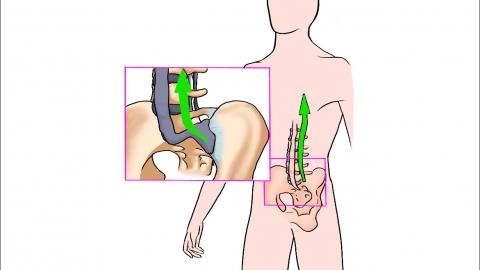
The hallmark pathological feature of AS is enthesitis— inflammation at tendon and ligament insertion sites. In early disease stages, the sacroiliac joints are most commonly involved, manifesting as insidious low back pain and morning stiffness; symptoms often temporarily improve with activity but worsen during nighttime rest. As the disease progresses, inflammation spreads upward along the spine, gradually involving the thoracic and cervical vertebrae, leading to reduced spinal mobility. Some patients may also develop peripheral joint manifestations, such as heel pain or swelling and pain in the knee joints.
Currently, AS cannot be cured definitively. Treatment focuses on controlling inflammation, slowing disease progression, and preserving joint function. In early-stage disease, nonsteroidal anti-inflammatory drugs (NSAIDs) are commonly used to alleviate pain and stiffness, often combined with disease-modifying antirheumatic drugs (DMARDs) to retard structural damage. For patients with high disease activity, biologic agents may be employed to precisely target and suppress inflammatory pathways. Concurrently, consistent rehabilitation exercises and posture management are essential to prevent spinal deformity and ankylosis, thereby maintaining functional independence.
In daily life, regular spinal stretching and functional exercises, maintaining proper standing and sitting posture, avoiding prolonged sitting or bed rest, keeping the lumbar and dorsal regions warm, ensuring balanced nutrition and regular sleep patterns, and appropriately supplementing calcium can all help slow the progression of joint stiffness.


