


How to Treat an Ankle Sprain

Ankle sprains can be managed through various approaches, including immobilization and rest, early cold therapy, later heat therapy and physical rehabilitation, topical and oral medications, and surgical intervention when necessary. Most ankle sprains involve ligamentous strain or partial tearing; improper weight-bearing may exacerbate soft-tissue damage. Treatment selection should be based on the severity of the sprain. If deformity of the ankle or complete inability to stand or walk occurs, prompt medical evaluation and treatment at a hospital are essential.
1. Immobilization, Rest, and Protection: Immobilization and rest constitute the foundational management following an ankle sprain. Weight-bearing on the injured ankle should be minimized—standing and walking should be avoided whenever possible. Bracing or elastic bandaging may be used for ankle stabilization when necessary. Ankle rotation, inversion, and eversion movements must be restricted to prevent further stretching or injury to the damaged ligaments. Elevating the affected limb during rest facilitates local interstitial fluid drainage and helps reduce swelling.
2. Early Cold Therapy: Cold therapy is indicated within the first 48 hours post-injury. A cold towel or ice pack applied to the swollen and painful area induces local vasoconstriction, thereby reducing internal bleeding, alleviating swelling, and diminishing pain. Each cold application should be limited in duration, with intervals between applications. Avoid direct skin contact with extremely cold objects to prevent frostbite or cold-induced skin injury.
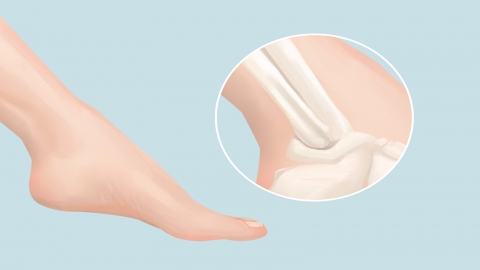
3. Later Heat Therapy and Physical Rehabilitation: Heat therapy and physical rehabilitation are initiated after the initial 48-hour period. Warm towels or therapeutic devices (e.g., infrared lamps, ultrasound) may be applied to the affected area to promote local vasodilation, accelerate resolution of hematoma, and relax surrounding tense soft tissues.
4. Topical and Oral Medications: Topical and oral medications help alleviate pain and swelling associated with ankle sprains. Topical agents (e.g., gels, creams, or patches) are applied directly to the affected ankle to relieve localized discomfort. For more severe symptoms, oral analgesics or anti-inflammatory medications may be prescribed under professional guidance to control pain and inflammation.
5. Surgical Intervention: Most ankle sprains do not require surgical treatment. However, surgical intervention may be considered in cases of complete ligament rupture or concomitant fractures, particularly when conservative management yields suboptimal recovery. Surgery aims to repair torn ligaments and address associated bony injuries. Postoperatively, appropriate immobilization and rest are essential, followed by progressive, supervised rehabilitation exercises to restore ankle mobility and function.
During the rehabilitation phase, gradually strengthen the muscles surrounding the ankle joint. Prior to physical activity, perform adequate warm-up exercises; wear properly fitting footwear and socks; avoid uneven surfaces; and take precautions to minimize the risk of recurrent ankle sprains.


