


Can early-stage black spots caused by tooth decay be brushed away?

Early-stage cavities manifest as black spots that cannot be removed by brushing. These black spots indicate demineralization and structural damage to the tooth’s hard tissues—damage occurring internally within the tooth. While brushing effectively removes surface dental plaque, it cannot repair already-damaged tooth structure. Therefore, if you notice black spots on your teeth, prompt dental evaluation and treatment are essential.
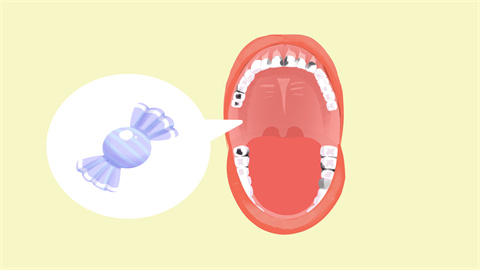
Black spots on the tooth surface fall into two categories: one is extrinsic pigment deposition adhering to the enamel surface, which can be removed via professional dental cleaning (scaling); the other is early dental caries—bacterial erosion of the enamel leading to internal demineralization, with the black spot penetrating into the tooth structure. Routine brushing only cleans superficial oral debris and cannot eliminate already-damaged tooth tissue or reverse the progression of caries.
In the earliest stage of decay—before a cavity (dental cavity) has formed—the dentist may apply topical fluoride to promote enamel remineralization and halt further carious progression. If decay has advanced deeper, the dentist must remove the infected and softened tooth structure and restore the tooth using a dental filling material. Delaying treatment allows the black spot to gradually enlarge, eventually forming an actual cavity, which may subsequently lead to sensitivity, pain, and inflammation.
To maintain optimal oral health, brush thoroughly twice daily (morning and night), use dental floss to clean interdental spaces, limit intake of sugary foods and carbonated beverages, and schedule regular dental check-ups to detect early dental changes promptly.


