


Why Does the Knee Become Bruised?

Bruising (ecchymosis) around the knee may result from unintentional bumps or knocks, localized pressure or friction, fragile blood vessel walls, abnormal platelet function, or allergic purpura. It can be improved through local cold compresses, minimizing external mechanical stimulation, and targeted pharmacotherapy. However, if unexplained bruising recurs frequently, prompt medical evaluation is essential.
1. Unintentional bumps or knocks: During daily activities, minor impacts to the knee can rupture subcutaneous capillaries, causing bleeding. Accumulated blood in the subcutaneous tissue leads to visible bruising. After such an injury, immediate cold application is recommended to minimize subcutaneous hemorrhage; avoid repeated massaging or rubbing of the bruised area.
2. Localized pressure or friction: Prolonged kneeling or repetitive friction and compression on the knees can damage small subcutaneous vessels, resulting in minor bleeding into surrounding tissues and subsequent bruising—often without significant pain. To prevent this, minimize kneeling positions, avoid prolonged pressure or friction on the knees, and ensure appropriate local protection.
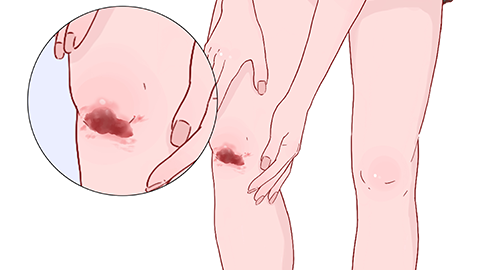
3. Fragile blood vessel walls: Reduced vascular elasticity and increased capillary permeability make vessels more susceptible to rupture—even with minimal external force. This often manifests as recurrent, unexplained knee bruising with slow resolution. Under medical supervision, supplementation with vitamin C tablets, rutin tablets, or vitamin E soft capsules may help improve symptoms.
4. Abnormal platelet function: Impaired platelet-mediated hemostasis reduces the body’s ability to stop bleeding effectively. Even minor trauma may trigger subcutaneous hemorrhage, leading to spontaneous knee bruising. Under physician guidance, medications such as tranexamic acid tablets, etamsylate tablets, or compound rutin tablets may be used to alleviate symptoms.
5. Allergic purpura: A systemic hypersensitivity reaction causes inflammatory injury to small blood vessels, markedly increasing their permeability. Knee bruising may occur, sometimes accompanied by mild lower-limb petechiae or rash. Treatment under medical supervision may include loratadine tablets, calcium gluconate oral solution, or prednisone tablets to manage symptoms.
In daily life, protect the knee joints by avoiding bumps and excessive pressure, maintaining a balanced diet, engaging in moderate exercise, and enhancing vascular elasticity to reduce the likelihood of subcutaneous bleeding.


