


What Are the Differences Between Purpura and Congestive Rash?

Distinguishing purpura from congestive rashes involves evaluating differences in pathogenesis, blanching response to pressure, lesion appearance, resolution patterns, and systemic manifestations. If the rash spreads rapidly or is accompanied by symptoms such as abdominal pain or hematuria, prompt medical evaluation and treatment are recommended.
1. Differences in pathogenesis: Purpura results from extravasation of blood components into the subcutaneous tissue, commonly associated with vascular injury or platelet dysfunction. Congestive rashes arise from capillary dilation and hyperemia in the superficial skin layers, typically triggered by local inflammatory stimuli.
2. Differences in blanching response to pressure: Purpura represents subcutaneous hemorrhage; therefore, applying finger pressure to the lesion does not cause fading of color. In contrast, congestive rashes result from vasodilation; thus, pressure causes transient blanching, with rapid return to the original red hue upon release.
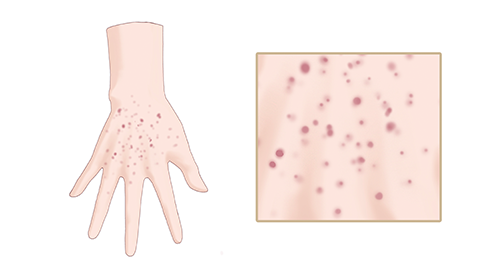
3. Differences in lesion appearance: Purpuric lesions appear purple-red or dark-red, typically presenting as petechiae or ecchymoses that lie flat on the skin surface. Congestive rashes are usually bright red; some lesions may be elevated above the skin surface and manifest as erythematous macules, papules, or other morphologies.
4. Differences in resolution patterns: Purpura resolves slowly, with color gradually changing from purple-red to yellow-brown over an extended period before complete resolution. Congestive rashes fade rapidly as inflammation subsides and generally do not leave residual yellow-brown pigmentation.
5. Differences in systemic manifestations: Purpura may be associated with epistaxis, gingival bleeding, and involvement of joints, the gastrointestinal tract, and other organ systems. Congestive rashes are typically confined to the skin, often accompanied by pruritus or a burning sensation, with rare visceral involvement.
In daily life, wear soft, loose-fitting clothing to minimize friction over affected areas. Consume light, easily digestible foods, ensure adequate sleep, avoid applying unproven home remedies to lesions, and closely monitor changes in the skin lesions.


