


Why Is the Pain More Severe on the Right Side in Intervertebral Disc Herniation?

Right-sided lumbar disc herniation and associated pain are linked to several factors, including rightward disc protrusion, compression of the right nerve root, compensatory strain and overuse of the right paraspinal muscles, narrowing of the right spinal canal, and habitual right-sided weight-bearing during daily activities. If persistent weakness in the right leg or abnormalities in bowel or bladder function occur, prompt medical evaluation and treatment are recommended.
1. Rightward disc protrusion: A tear develops in the annulus fibrosus of the intervertebral disc, allowing the nucleus pulposus to migrate toward the right side. This displaced tissue lies in close proximity to surrounding soft tissues on the right, triggering localized inflammatory irritation. During movement, friction occurs between the displaced tissue and adjacent structures, thereby intensifying right-sided pain.
2. Compression of the right nerve root: The herniated nucleus pulposus compresses the nerve root traveling on the right side, resulting in mechanical irritation and stimulation of neural tissue. This leads to pain radiating from the right lower back to the buttock and down the right leg. Activities such as coughing or forward bending exacerbate the compression, causing a marked increase in pain intensity.
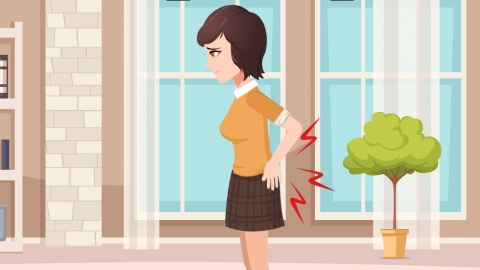
3. Compensatory strain and overuse of the right paraspinal muscles: In response to discomfort caused by the underlying pathology, the body unconsciously adjusts posture, shifting greater biomechanical load onto the right paraspinal musculature. Prolonged muscle tension and repetitive stretching impair local metabolism, leading to accumulation of metabolic byproducts; combined with the primary lesion, this amplifies right-sided pain perception.
4. Narrowing of the right spinal canal: Congenital or acquired reduction in the cross-sectional area of the spinal canal on the right side means even minor disc protrusions can produce significant neural compression. At equivalent degrees of disc herniation, the reduced space available for neural structures on the right diminishes their capacity to accommodate compression, resulting in more pronounced pain compared with the left side.
5. Habitual right-sided weight-bearing in daily posture: Chronic preference for bearing weight on the right side while sitting or standing subjects the right lumbar spine to persistently elevated mechanical stress. This accelerates local degenerative changes and intensifies irritation of surrounding tissues by the herniated disc material—over time, contributing to disproportionately severe right-sided pain.
Regularly correct postural imbalances consciously; alternate sides when sleeping in the lateral decubitus position. Engage in moderate core and paraspinal muscle strengthening exercises, avoid unilateral lumbar loading, maintain adequate lumbar warmth, and undergo periodic follow-up imaging to monitor actual changes in disc morphology.


