Can a cervical disc herniation retract?
Sep 05, 2026
Source: Cainiu Health

Dr. Chen Jian
Introduction
Cervical disc herniation typically does not spontaneously retract. Once the annulus fibrosus of the intervertebral disc is damaged, the nucleus pulposus protrudes outward, and such structural changes are generally irreversible. Conservative treatments primarily aim to alleviate discomfort caused by nerve compression—not to reposition the herniated disc material. If numbness or pain in the limbs progressively worsens, prompt medical evaluation and appropriate treatment are essential.
Cervical disc herniation typically does not spontaneously retract. Once the annulus fibrosus (the outer fibrous ring of the intervertebral disc) is damaged, the nucleus pulposus (the gelatinous inner core) protrudes outward, and such structural changes are generally irreversible.
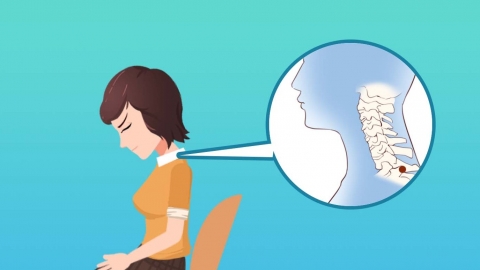
The cervical intervertebral disc consists of an outer annulus fibrosus and an inner nucleus pulposus. Prolonged strain or traumatic impact can cause tears in the annulus fibrosus, leading to outward protrusion of the nucleus pulposus. Following annular damage, the disc lacks intrinsic capacity for self-repair, making spontaneous repositioning of the nucleus pulposus highly unlikely. In some individuals, symptom relief—such as reduced nerve root edema and alleviated pain—may occur with rest and conservative management, potentially leading to the mistaken impression that the herniation has retracted or resolved.
Clinically, treatment focuses on symptom control. Mild cases are managed conservatively through rest, cervical traction, and physical therapy to relax neck muscles and reduce nerve root edema. When pain is pronounced, symptomatic pharmacotherapy may be added to improve comfort. If conservative measures fail and nerve compression becomes severe, surgical decompression may be indicated. Patients should avoid unproven folk remedies claiming to “retract” disc herniations, as inappropriate interventions may exacerbate cervical spine injury.
In daily life, minimize prolonged head-down postures while using electronic devices and engage in appropriate neck muscle strengthening exercises. Maintain adequate warmth around the neck and shoulders, preserve the cervical spine’s natural lordotic curvature, and thereby help prevent further disc protrusion.