


What Are the Types of Knee Joint Deformities?

Knee joint deformities include varus (bow-legged) deformity, valgus (knock-kneed) deformity, flexion contracture deformity, hyperextension deformity, and rotational deformity. If you experience severe knee pain that prevents weight-bearing or significant lower-limb alignment deviation, seek prompt medical evaluation and treatment.
1. Varus Deformity (Bow-legged): When standing with ankles together, a noticeable gap remains between the knees. The lower-limb mechanical axis deviates medially, causing increased weight-bearing stress on the medial compartment of the knee joint. Over time, this accelerates medial cartilage wear and may lead to joint pain and degeneration.
2. Valgus Deformity (Knock-kneed): When standing, the knees touch or come close together while the ankles cannot approximate. The lower-limb mechanical axis shifts laterally, subjecting the lateral tibiofemoral joint surface to excessive loading. This often results in abnormal gait patterns and may cause secondary joint swelling and pain.
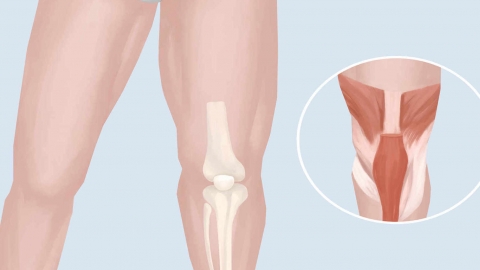
3. Flexion Contracture Deformity: The knee cannot fully extend and remains persistently bent at a fixed angle. This is commonly caused by soft-tissue contracture or intra-articular pathology. Altered weight distribution during standing and walking leads to abnormal gait and increased fatigue in surrounding musculature.
4. Hyperextension Deformity: The knee extends excessively backward beyond its normal physiological range when standing. Chronic stretching of posterior ligamentous structures compromises joint stability, and abnormal shear forces within the joint accelerate articular degeneration during movement.
5. Rotational Deformity: Abnormal internal or external torsion of the tibia relative to the femur occurs. This alters foot orientation and disrupts normal load distribution across the knee joint during ambulation. Prolonged malalignment contributes to progressive joint wear and results in an abnormal gait pattern.
In daily life, choose well-cushioned footwear, avoid prolonged walking or stair climbing while bearing heavy loads, select appropriate orthotic supports based on the specific deformity, strengthen the quadriceps muscles moderately, and regularly monitor changes in lower-limb alignment to help delay further joint deterioration.


