


Which part should be immobilized for finger joint dislocation?

For finger joint dislocation, immobilization primarily targets the dislocated interphalangeal (IP) or metacarpophalangeal (MCP) joint, while also incorporating the adjacent, unaffected phalanx to ensure stable immobilization of the dislocated joint. The immobilization area should precisely conform to the injured joint region—avoiding unnecessary coverage of the entire finger. If finger deformity persists despite attempted reduction or if motion remains severely restricted, prompt medical evaluation and intervention are essential.
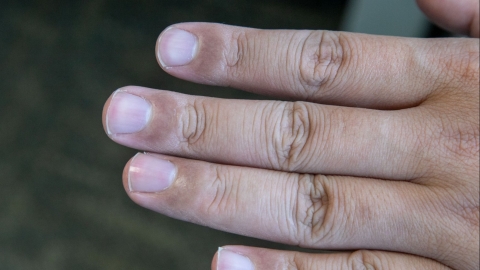
Finger joint dislocations commonly result from external forces such as twisting, impact, or traction injuries, leading to tears or laxity in the joint capsule and ligaments and consequent loss of normal joint alignment. Immobilizing only the dislocated joint may permit minor movement; including the adjacent phalanx in the immobilization restricts flexion, extension, and lateral motion—thereby creating optimal conditions for healing of the injured soft tissues. Proper immobilization helps prevent recurrent dislocation and reduces the risk of soft-tissue adhesions.
Management of finger dislocation begins with professional reduction, followed by localized immobilization using a splint or brace to maintain the joint in its anatomically correct position. The duration of immobilization is tailored to the severity of injury. During this period, gripping and forceful hand activities should be minimized. After immobilization is discontinued, progressive range-of-motion exercises—including controlled flexion and extension—should be initiated gradually to restore joint mobility and prevent stiffness that could impair hand function.
In daily life, take precautions to protect the hands—avoiding excessive traction or loading on the joints. In the later stages of recovery, continue gentle joint mobility exercises to enhance the resilience of surrounding soft tissues, stabilize the finger joints, and lower the risk of recurrent dislocation.


