


What Are the Early Symptoms of Psoriasis?

Psoriasis, commonly known as “psoriasis vulgaris” or “silver scaly disease,” presents with several characteristic early symptoms, including red inflammatory papules, silvery-white scales covering the skin surface, pruritus (itching) at affected sites, a thin, translucent film-like appearance of the skin, and pinpoint bleeding (Auspitz sign). Lesions most frequently appear on the extensor surfaces of the limbs and the scalp, though they may occur anywhere on the body. If widespread eruption of skin lesions or persistent fever develops, prompt medical evaluation and treatment are strongly recommended.
1. Red inflammatory papules: Small, well-demarcated red papules of varying sizes appear on the skin surface. They may be scattered or clustered in small groups and range in color from light pink to bright red; their color deepens upon palpation.
2. Silvery-white scales on the skin surface: A thin, whitish scale gradually forms over the papules. These scales are easily shed—gentle scraping causes visible flaking. The amount of scaling may fluctuate depending on environmental factors and the individual’s overall health status, making this one of the most typical early features of psoriasis.
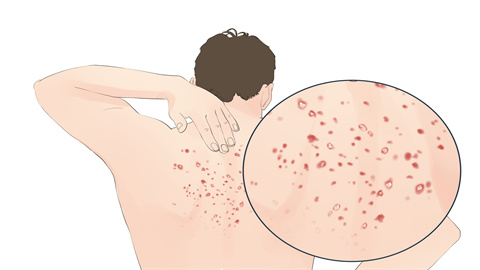
3. Pruritus at lesional sites: Affected skin areas often elicit itching, with intensity varying significantly among individuals. Some patients experience only mild pruritus, while others suffer frequent, distressing itch; scratching may exacerbate and expand the lesions.
4. Film phenomenon: After gently removing the superficial scales, a thin, shiny, pale-red membrane becomes visible beneath. This membrane is delicate and highly sensitive to external stimuli; mechanical friction further alters the skin’s appearance.
5. Pinpoint bleeding (Auspitz sign): Lightly scraping through this underlying membrane reveals multiple discrete, minute bleeding points. Bleeding is minimal and results from epidermal injury; this sign helps differentiate psoriasis from other dermatoses.
In daily life, use gentle, non-irritating cleansers and skincare products; minimize skin trauma from friction or impact; maintain emotional stability; avoid upper respiratory tract infections; monitor skin changes closely; and reduce exposure to external triggers that may promote disease progression.
How do the early symptoms of psoriasis differ from those of eczema?
What are the underlying causes of psoriasis?
Recommended topical medications for psoriasis treatment


