


What are the symptoms of tinea cruris?

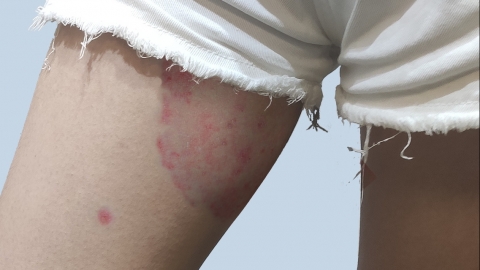
Tinea cruris (jock itch) presents with well-demarcated erythematous plaques, skin scaling, pruritus, papules and vesicles, and post-inflammatory hyperpigmentation. These manifestations commonly occur in warm, moist, and sweaty areas such as the groin and buttocks. Persistent fungal proliferation causes the lesions to gradually expand outward. If rapid lesion spread or signs of secondary bacterial infection—such as localized suppuration, swelling, and pain—occur, prompt medical evaluation and treatment are strongly recommended.
1. Well-Demarcated Erythematous Plaques:
In the early stage, light-red patches appear on the affected skin, with sharply defined borders that slowly extend peripherally. Inflammatory changes in the central area may spontaneously subside, resulting in annular or semi-annular lesions clearly distinguishable from surrounding normal skin.
2. Skin Scaling:
Fine, white scales adhere to the surface of the erythematous plaques and readily desquamate. Ongoing fungal invasion of the superficial keratin layer progressively disrupts skin architecture; thus, scaling intensifies as the disease progresses. Scratching further exacerbates scale shedding.
3. Pruritus and Discomfort:
Persistent itching occurs at the affected site, markedly worsening in warm environments or after sweating. Repeated scratching irritates the skin, aggravating local inflammation and increasing the risk of skin breaks and secondary infection.
4. Papules and Vesicles:
Small papules may develop along the margins of the lesions; as the condition advances, these may evolve into small vesicles. Ruptured vesicles release minimal serous exudate, further damaging the epidermis and facilitating fungal spread to adjacent healthy skin.
5. Post-Inflammatory Hyperpigmentation:
After resolution of inflammation, darkened pigmented marks remain at the affected site. Pigment fading is typically slow; in some individuals, hyperpigmentation may persist long-term. Scratching or irritation can deepen the pigmentation and prolong skin recovery time.
To prevent tinea cruris, maintain dryness in the groin and buttock regions daily. Wear breathable, cotton-based clothing; promptly clean and dry the area after sweating; and avoid sharing towels or clothing to minimize the risk of cross-infection.


