


What Are the Symptoms of a Meniscus Injury?
Sep 24, 2026
Source: Cainiu Health

Dr. Chen Jian
Introduction
Meniscus injuries can cause symptoms such as knee pain, joint swelling and effusion, joint locking or catching, restricted flexion and extension, and leg muscle atrophy. The meniscus functions as a shock absorber; when damaged, it irritates the synovial membrane inside the joint, disrupting normal knee function and leading to various discomforts. If persistent joint locking (inability to move the joint) or inability to bear weight on the affected limb occurs, prompt medical evaluation and treatment are recommended.
Meniscus injuries can cause knee pain, joint swelling and effusion, joint locking or catching, restricted flexion and extension, and leg muscle atrophy. The meniscus serves as a shock absorber in the knee; when damaged, it irritates the synovial membrane inside the joint, disrupting normal knee function and leading to various uncomfortable symptoms. If you experience persistent joint locking that prevents movement or inability to bear weight on the affected limb, seek prompt medical evaluation and treatment.
1. Knee Pain:
Pain occurs at the site of injury and intensifies during activities such as knee flexion, squatting, or twisting the knee. With mild injuries, discomfort may only appear after activity; however, with more severe tears, aching, pressure-like, or sharp pain may persist even at rest.
2. Joint Swelling and Effusion:
External trauma or meniscal tearing stimulates the synovial membrane, triggering increased fluid secretion and resulting in joint swelling and distension. Swelling typically develops progressively after injury. When significant effusion is present, knee flexion and extension become markedly impaired, and palpation reveals a full, taut sensation over the knee.
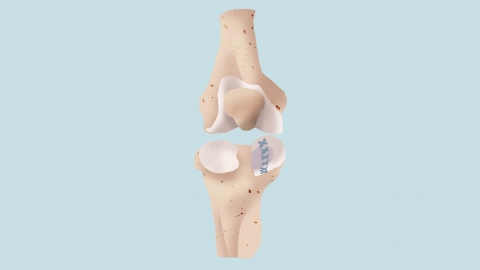
3. Joint Locking or Catching:
Torn fragments of the meniscus may become lodged within the joint space, causing sudden, transient locking during knee movement—preventing smooth rotation. Occasionally, gentle oscillation of the knee may release the lock; however, recurrent episodes can interfere with daily activities such as walking or ascending/descending stairs.
4. Restricted Flexion and Extension:
Pain and mechanical obstruction limit the range of motion of the knee, making it difficult to fully squat or fully extend the leg. Reaching certain angles may provoke sharp pain, prompting patients to avoid exertion—gradually reducing overall knee mobility.
5. Leg Muscle Atrophy:
To avoid pain, individuals often reduce weight-bearing activity on the affected limb, leading to progressive thinning of the quadriceps muscles on the front of the thigh. As muscle strength declines, the knee loses adequate muscular support, increasing susceptibility to instability, weakness, and “giving way.”
In daily life, minimize deep squats and abrupt stops or directional changes. Pay attention to ground conditions while walking, and promptly stop and rest if you feel instability or weakness in the knee. Incorporate targeted muscle-strengthening exercises to enhance lower-limb support and protect the knee joint.


