


How should pressure ulcers be treated?

Pressure ulcer treatment involves daily pressure-relieving care, physical wound management, topical dressings and medications, oral medications for systemic regulation, and surgical debridement and repair. These interventions aim to reduce sustained local tissue pressure, improve wound condition, control infection, and promote gradual healing of damaged skin and subcutaneous tissues. If persistent wound purulence or continuous fever occurs, prompt medical evaluation and treatment at a hospital are recommended.
1. Daily Pressure-Relieving Care:
Regularly reposition the body to alleviate pressure on bony prominences. Use pressure-relieving pads to distribute body weight evenly. Keep the skin surface dry and promptly clean sweat and excretions to prevent prolonged moisture-induced skin irritation.
2. Physical Wound Management:
Clean the wound using gentle irrigation to softly remove loosely adherent necrotic tissue. Maintain optimal wound temperature and humidity to support granulation tissue formation. Minimize friction and shear forces on the wound to prevent further deepening or expansion.
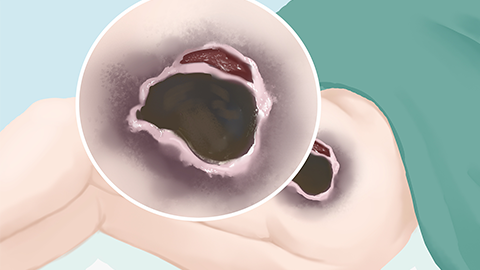
3. Topical Dressings and Medications:
Select appropriate dressings based on wound characteristics to cover and protect the wound, and apply topical antimicrobial agents to suppress local bacterial proliferation. Change dressings regularly and monitor granulation tissue development; adjust the treatment plan promptly if any adverse changes occur.
4. Oral Medication Therapy:
When wound infection is present or inflammation is extensive, administer systemic antibiotics or anti-inflammatory medications as prescribed to prevent infection spread. Adhere strictly to the physician’s instructions regarding dosage and duration; monitor for adverse reactions and avoid arbitrary modification of treatment length to prevent worsening infection.
5. Surgical Debridement and Repair:
For deep pressure ulcers with extensive necrotic tissue, surgical debridement is performed to remove nonviable tissue; flap reconstruction may be required when indicated. Postoperatively, strict positioning protocols and continuous pressure relief must be maintained, and wound healing progress should be closely monitored to minimize the risk of recurrent breakdown.
In daily life, increase intake of high-quality protein and vitamins to enhance the body’s tissue repair capacity. Routinely inspect pressure-prone areas for early signs—such as localized erythema or induration—to detect and intervene in pressure injury development before it progresses.


