


Is blurred vision while watching TV a sign of myopia?

Myopia significantly impacts daily life and work. Therefore, upon noticing early signs of myopia, it is essential to visit a hospital for a professional eye examination. If the condition is diagnosed as pseudo-myopia, vision may be restored through routine lifestyle adjustments and eye care. However, if it is true (axial) myopia, optical correction—such as glasses or contact lenses—is necessary. So, does blurred vision while watching TV indicate myopia? The following section addresses this question.
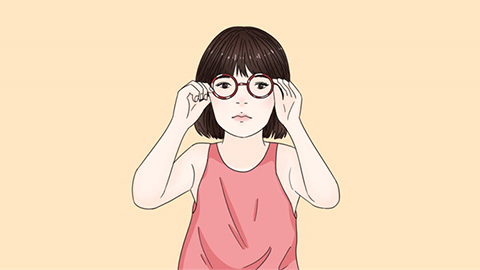
Does Blurred Vision While Watching TV Indicate Myopia?
Generally speaking, blurred vision while watching TV is not necessarily a sign of myopia. Prolonged TV viewing exposes the eyes to rapidly moving images and fluctuating light intensities, which can lead to eye fatigue, dryness, a sensation of pressure or fullness in the eyes, visual blurring, and even dizziness—all of which may temporarily reduce visual acuity. Individuals with pre-existing refractive errors may experience more pronounced visual decline or fatigue symptoms during TV viewing.
These symptoms are not manifestations of myopia per se; however, excessive TV viewing is a known risk factor for myopia development—particularly among adolescents. Long-term, unregulated screen time significantly increases the likelihood of developing myopia. Thus, blurred vision while watching TV is not itself diagnostic of myopia, but for adolescents, it may signal an increased risk of myopia onset. To mitigate this risk, avoid prolonged TV viewing; do not stare fixedly at the screen for extended periods. Instead, take a break every 10–15 minutes to gaze into the distance or consciously blink several times.
Additionally, acupressure on key points such as the temples (Taiyang point) and Jingming point may help improve ocular blood circulation and effectively relieve eye fatigue.
We hope the above information is helpful to you.


