Do patients with intussusception pass stool?
Mar 21, 2022
Source: Cainiu Health
Dr. Cui Zhenqin
Introduction
After developing intussusception, a child may still pass stool. Diarrhea may occur; however, in most cases of intussusception, the stool appears as “currant jelly” stool. This is often accompanied by sudden, severe vomiting. Additionally, some patients may not experience diarrhea at all—only one or two bowel movements may occur during the early stage of intussusception.
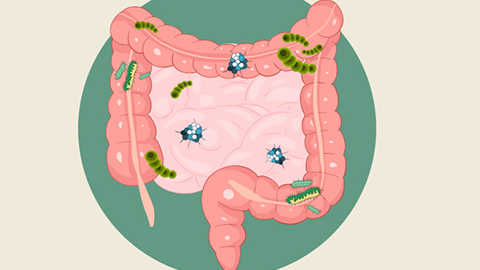
Intussusception refers to a condition in which a segment of the intestine telescopes into the adjacent intestinal lumen, thereby obstructing the passage of intestinal contents. It is a very common acute abdominal condition in infants and young children, particularly prevalent in those under two years of age. When a child develops intussusception, several distinct symptoms may appear, including sudden, persistent crying, recurrent vomiting, abdominal pain, and diarrhea. So, do children with intussusception pass stool? The following section addresses this question.
Do children with intussusception pass stool?
Yes, children with intussusception may still pass stool. In fact, some may experience diarrhea. However, the majority of patients with intussusception pass “currant-jelly” stools—characterized by a mixture of blood and mucus giving the stool a dark red, gelatinous appearance. This is often accompanied by sudden, severe vomiting. Additionally, some patients may not develop diarrhea at all; instead, they may pass stool only once or twice during the early stages of intussusception, after which complete constipation occurs due to obstruction of intestinal transit.
It is critical for parents to recognize that, upon suspecting intussusception, the child must immediately be placed on nothing-by-mouth (NPO) status—no food or fluids—and promptly taken to a hospital for evaluation.Typically, intussusception is treated non-surgically via enema reduction. If enema reduction fails, surgical intervention becomes necessary. Following surgery, the child must remain NPO both pre- and postoperatively, receiving nutrition solely through intravenous fluids until cleared by the medical team.
During treatment, parents should closely monitor their child’s clinical status. Any recurrence of sudden, unexplained crying warrants immediate notification of the treating physician.After successful enema reduction or surgical treatment, the child’s diet should begin with clear liquids and gradually advance to full liquids and soft foods. Feedings should start small and increase incrementally in volume. For the first meal, a small amount of liquid diet—such as diluted rice water or sugar water—is recommended.
I hope this information has been helpful to you.