


What Are the Common Traditional Chinese Medicine (TCM) Treatments for Priapism?

Traditional Chinese Medicine (TCM) therapies are gaining increasing popularity. After all, such treatments are not only free of adverse effects but can also effectively alleviate the suffering caused by disease. Experts indicate that numerous Chinese herbal medicines demonstrate notable efficacy in treating priapism. So, what are the common TCM approaches for managing priapism?
Common TCM Treatments for Priapism
If priapism results from damp-heat in the Liver and Gallbladder meridians, the recommended formula is Long Dan Xie Gan Tang (Gentiana Decoction to Drain the Liver), comprising Gentianae Radix (Long Dan Cao) 12 g, Scutellariae Radix (Huang Qin) 10 g, Rehmanniae Radix Praeparata (Sheng Di Huang) 15 g, Bupleuri Radix (Chai Hu) 10 g, Akebiae Caulis (Mu Tong) 10 g, Plantaginis Semen (Che Qian Zi) 10 g, Alismatis Rhizoma (Ze Xie) 12 g, Angelicae Sinensis Radix (Dang Gui) 12 g, and Glycyrrhizae Radix (Gan Cao) 10 g, supplemented with Coicis Semen (Yi Yi Ren) 10 g and Carthami Flos (Hong Hua) 10 g.
For priapism arising from hyperactivity of fire due to Kidney Yin deficiency, Zhi Bai Di Huang Tang (Anemarrhenae–Phellodendri–Rehmannia Decoction) is prescribed: Rehmanniae Radix Praeparata (Sheng Di Huang) 15 g, Phellodendri Cortex (Huang Bai) 10 g, Anemarrhenae Rhizoma (Zhi Mu) 10 g, Poria (Fu Ling) 15 g, Alismatis Rhizoma (Ze Xie) 15 g, Moutan Cortex (Dan Pi) 12 g, and Corni Fructus (Shan Zhu Yu) 12 g—plus Gentianae Radix (Long Dan Cao) 12 g.
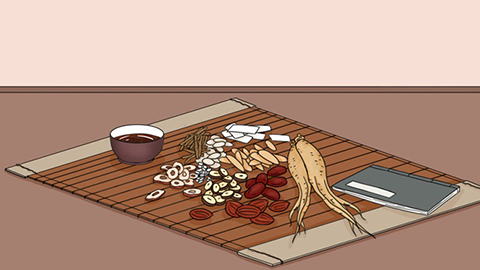
Although herbal medicine treatment for priapism generally causes minimal systemic side effects, therapeutic outcomes may vary significantly among individuals. In severe cases, timely surgical intervention remains essential. Commonly performed procedures include shunt surgery and distal shunt surgery.
During treatment, adequate rest is crucial; physical overexertion should be avoided, and excessive sexual stimulation must be minimized. We hope this information proves helpful to you.


