


What causes fleshy growths around the anus?

Some individuals experience significant difficulty during bowel movements due to prolonged stress and frequent late-night activity. Occasionally, small fleshy growths may appear around the anus, causing considerable distress. So, what causes these fleshy growths around the anal opening?
What Causes Fleshy Growths Around the Anal Opening?
Fleshy growths around the anal opening may arise from several conditions: First, external hemorrhoids—prolonged sitting or standing impairs venous return, leading to venous dilation and protrusion above the skin surface, resulting in soft, fleshy nodules outside the anus. Second, internal hemorrhoids—when impaired venous return causes hemorrhoidal tissue to prolapse from the anal canal, it manifests as fleshy nodules protruding from the anus. Third, perianal abscesses—as the abscess worsens, the surrounding perianal skin becomes thin and weakened, allowing the abscess to bulge outward through the skin, forming a red, raised swelling.
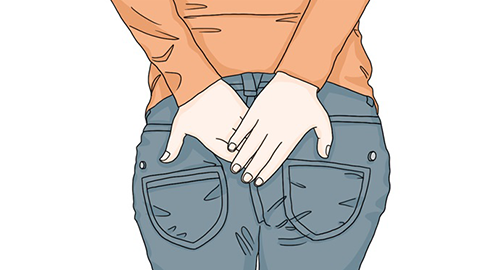
Fourth, perianal skin tags—chronic irritation from hemorrhoids or other anorectal conditions may induce hyperplasia of the perianal skin bridges, resulting in proliferative skin tags. If the growth is small, conservative management—such as topical medications or oral anti-inflammatory and antimicrobial agents—may be sufficient to alleviate symptoms. However, if the growth continues to enlarge, becomes erythematous, or causes pruritus, surgical excision may be indicated—though this carries a potential risk of postoperative fecal incontinence.
In daily life, avoid consuming spicy or “heat-inducing” foods, which may exacerbate symptoms and hinder recovery. Additionally, warm sitz baths and constitutional regulation can support restoration of normal function. We hope this information proves helpful!


