


Can color blindness be treated?
Apr 27, 2022
Source: Cainiu Health

Dr. Pan Yongyuan
Introduction
Color vision deficiency is incurable. Color vision is one of the functions of retinal cone cells, enabling perception of various colors across the visible light spectrum. When a patient loses the ability to distinguish colors, it is termed color vision deficiency. Congenital color vision deficiency is a hereditary condition inherited in an X-linked recessive pattern. It can be classified into the following types: complete achromatopsia (total color blindness), protanopia (red blindness), deuteranopia (green blindness), tritanopia (blue-yellow blindness), color weakness (mild color vision deficiency), visual fatigue, and latent color blindness.
In daily life, some individuals suffer from color blindness, which causes significant inconvenience in both personal and professional settings. So, can color blindness be treated?
Can Color Blindness Be Treated?
Color vision deficiency is currently incurable. Color vision is one of the functions of cone photoreceptor cells in the retina, enabling perception of various colors across the visible light spectrum. When an individual loses the ability to distinguish certain colors, this condition is termed color vision deficiency. Congenital color vision deficiency is a hereditary disorder inherited in an X-linked recessive pattern. It may be classified into several types: achromatopsia (total color blindness), protanopia (red blindness), deuteranopia (green blindness), tritanopia (blue-yellow blindness), color weakness (mild color vision deficiency), visual fatigue, and latent color blindness. Acquired color vision deficiency arises later in life due to disease or severe damage affecting any part of the visual pathway—including the retina, optic nerve, choroid, or central brain regions—and is typically irreversible.
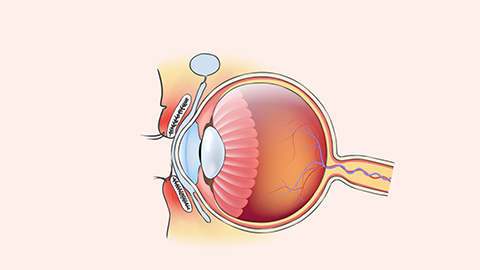
Congenital color vision deficiency—also referred to as color vision deficiency—is characterized by an inability to perceive certain colors or variations within the visible light spectrum. Color blindness is broadly categorized into two forms: total (achromatic) and partial (dichromatic or anomalous trichromatic). Partial color blindness includes protanopia (red blindness), deuteranopia (green blindness), and tritanopia (blue-yellow blindness). Achromatopsia represents a complete dysfunction of all cone photoreceptors. Unlike night blindness, patients with achromatopsia exhibit photophobia and prefer dim lighting—a condition known as “day blindness.” They perceive only differences in brightness, not hue; for example, red appears dark while blue appears bright. Additional symptoms often include reduced visual acuity, amblyopia (lazy eye), central scotoma (a blind spot in the center of the visual field), and nystagmus (involuntary, oscillating eye movements). Achromatopsia is the most severe form of color vision deficiency. In other forms of partial color blindness—such as protanopia, deuteranopia, and tritanopia—patients are unable to distinguish the corresponding colors.

Individuals with color blindness may benefit from wearing specialized color-correcting lenses, which can help them perceive colors they otherwise cannot distinguish. We hope this information has been helpful!



