


Efficacy and Effects of Pseudolaric Acid B (Tu Jing Pi)

Tu Jing Pi (Pseudolarix amabilis bark) is a relatively common traditional Chinese medicine encountered in daily life. It is used exclusively as a topical agent. What are the pharmacological effects and clinical applications of Tu Jing Pi?
Pharmacological Effects and Clinical Applications of Tu Jing Pi
Tu Jing Pi has a pungent, bitter, and warm nature, is toxic, and enters the Lung and Spleen meridians. Modern research indicates that Tu Jing Pi tincture exhibits inhibitory activity against various pathogenic fungi but lacks direct fungicidal effects. Its primary active constituent is pseudolaric acid, which demonstrates a broad-spectrum antimicrobial profile. Additionally, Tu Jing Pi possesses anti-fertility, anti-cancer, and hemostatic properties. However, due to its toxicity, it may cause adverse reactions such as nausea, diarrhea, and intestinal mucosal hemorrhage; therefore, it must never be administered orally and is strictly limited to external use. It is primarily employed for treating scabies, tinea (dermatophytosis), eczema, and neurodermatitis. For application, the bark of the Pseudolarix tree is soaked in vinegar or alcohol, then rubbed or ground into a fine powder and applied topically to the affected area. It is contraindicated in individuals with known hypersensitivity to Tu Jing Pi.
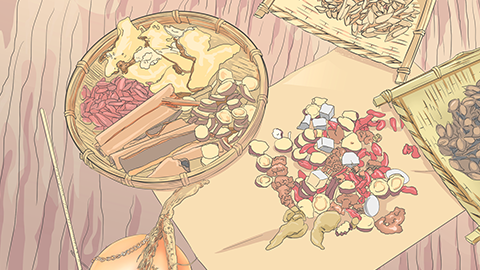
Antibacterial Activity: Tu Jing Pi exhibits antibacterial effects, showing varying degrees of inhibition against dermatophytes such as Trichophyton rubrum and Microsporum gypseum.
Cosmetic Effects: Tu Jing Pi promotes blood circulation and resolves stasis, thereby improving microcirculation. When combined with turmeric (Curcuma longa), it helps alleviate conjunctival congestion (“red eye”). As a single-agent topical treatment, it demonstrates remarkable efficacy in resolving traumatic swelling and ecchymosis.
Antimicrobial Activity Against Pathogens: Tu Jing Pi inhibits multiple pathogenic fungi but does not directly kill them. The potency of its antimicrobial effect varies depending on the formulation and specific constituents. The tincture demonstrates stronger antibacterial activity than decoctions; among its components, pseudolaric acid exhibits the most potent antimicrobial activity, with a broad spectrum encompassing Trichophyton rubrum, Microsporum audouinii, and Epidermophyton floccosum. We hope this information proves helpful to you!


