


How should one adjust their diet for deficiency of Qi and Blood?

Blood deficiency and impaired blood circulation are common manifestations of “Qi and Blood Deficiency” syndrome in women. Traditional Chinese Medicine (TCM) can effectively regulate this condition, and dietary adjustments—particularly consuming foods that nourish Qi and Blood—are also essential in daily life. So, how should one approach dietary therapy for Qi and Blood Deficiency?
How to Apply Dietary Therapy for Qi and Blood Deficiency
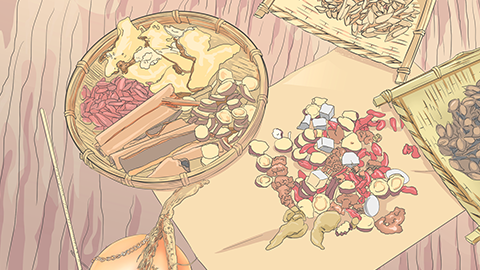
Foods that tonify Qi include Chinese yam (Shān Yào) and Poria (Fú Líng); herbs that nourish Blood include Lotus Leaf (Hé Yè), Mulberry Fruit (Sāng Shèn), and Taxillus (Sāng Jì Shēng). Qi-tonifying herbs commonly used include Ginseng (Rén Shēn), Codonopsis (Dǎng Shēn), and Pseudostellaria (Tài Zǐ Shēn). Herbal congees and teas can also help regulate Qi and Blood. Combining dietary therapy with appropriate herbal treatment yields excellent results. First, consider using Qi-tonifying herbs such as Codonopsis (Dǎng Shēn) and Astragalus (Běi Qí). However, individuals with hypertension should avoid these two herbs. Other effective Qi-tonifying ingredients include jujube dates (Dà Zǎo), Solomon’s Seal (Yù Zhú), and Chinese yam (Shān Yào); for nourishing Blood, Angelica sinensis (Dāng Guī) and fish maw (Yú Jiāo) are highly recommended. Preparing medicinal soups is an ideal method for dietary therapy.

For Blood deficiency, attention to diet is crucial—nutrient-rich foods help replenish both Qi and Blood. In addition, engaging in appropriate physical exercise is necessary. Regular movement promotes smooth circulation throughout the body and enhances Qi and Blood production. Only when Qi and Blood are properly regulated can food be effectively transformed into Qi and Blood to nourish the body. Qi and Blood deficiency can be modulated using foods that are also classified as medicinal herbs (“food-medicine homology”).
Qi and Blood mutually generate and transform each other—they are interdependent and synergistic. A deficiency in either one inevitably leads to relative insufficiency in the other, and prolonged imbalance may progress to full-blown Qi and Blood Deficiency. If symptoms of Qi deficiency accompanied by Blood deficiency appear, timely consultation with a TCM practitioner is advised to restore Qi and achieve balanced, healthy physiological function. We hope this information proves helpful!


