


What Are the Causes of Myopia?

People often say that the eyes are the windows to the soul—through them, we perceive all the beauty the world has to offer. Glasses-wearers are ubiquitous on city streets, many donning thick lenses daily. Over time, this can significantly affect one’s appearance and impose considerable inconvenience and limitations on daily life and physical activities. So, what causes myopia?
What Causes Myopia?
Myopia typically arises from two main factors: genetics and environment. Decades of research indicate a definite genetic component to myopia. If both parents are myopic, their child’s risk of developing myopia is substantially higher than average. Environmental factors also play a critical role—especially during eye development. Even in the absence of inherited predisposition, environmental influences can profoundly impact the onset and progression of myopia. Excessive near work or prolonged close-up visual tasks may initially induce *pseudo-myopia*, a temporary, reversible form of refractive error. With adequate rest, vision often improves; however, persistent strain may eventually lead to permanent myopia. This type—termed *physiological myopia*—generally does not exceed −6.00 diopters (D) and usually stabilizes after adolescence.
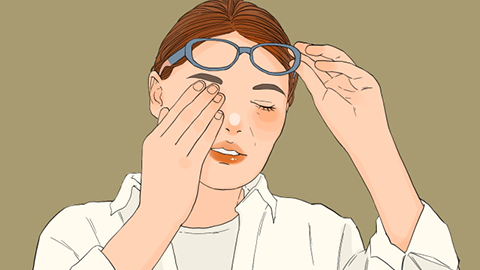
Myopia is one of the most common refractive errors. It occurs when, with the eye in a relaxed state, parallel light rays entering the eye converge *in front of* the retina rather than directly *on* it—resulting in blurred distance vision. During refraction testing, this condition is quantified as a negative value (e.g., −2.50 D), indicating the degree of myopia. Based on severity, myopia is classified as mild, moderate, or high: • Mild myopia: ≤ −3.00 D • Moderate myopia: −3.01 D to −6.00 D • High myopia: > −6.00 D
We recommend avoiding excessive eye strain and limiting prolonged smartphone use. We hope this information proves helpful.


