


How to Treat Myopia

People often say, “The eyes are the windows to the soul,” through which one can behold all the beauty in the world. Glasses-wearers are ubiquitous on city streets, and many of us wear thick lenses daily. Over time, this can significantly affect our appearance and impose considerable inconvenience and limitations on daily life and physical activities. So, how can myopia be effectively treated?
How to Treat Myopia
Myopia can be successfully corrected through refractive surgery, with rapid recovery and minimal disruption to normal daily life. On the day following surgery, patients may experience symptoms such as tearing, photophobia (light sensitivity), or a foreign-body sensation in the eye—these are normal postoperative reactions. When tears appear, gently blot them away with a clean tissue; avoid direct contact between paper towels or cloths and the eyeball. Keep your eyes closed and rest as much as possible. For the first three months after surgery, avoid swimming and other strenuous activities, and strictly adhere to your ophthalmologist’s instructions regarding medication use. When going outdoors at midday under intense sunlight, wear UV-protective sunglasses to shield your eyes from harmful bright light.
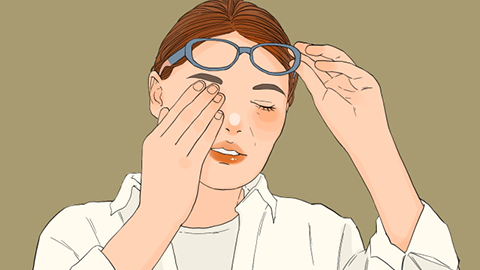
Complete relief of visual fatigue can help relax and release spasm in the ciliary muscle—the key ocular muscle responsible for focusing. Improving the visual environment, cultivating healthy eye habits, and limiting prolonged near-work are essential. Strictly prevent pseudo-myopia (temporary, reversible nearsightedness) from progressing into true, permanent myopia due to neglect of vision health management or inappropriate relaxation techniques. As an exercise, locate a grass blade or green tree approximately 10 meters away; avoid squinting or blinking. Focus intently on it for 25 seconds, carefully observing the outline of the grass blade or leaf. Perform “crystalline lens exercises”: sit comfortably, support your cheeks with both hands, and rotate your eyes slowly—first up, down, left, right (10 repetitions), then 10 rotations clockwise and 10 counterclockwise. For eye acupressure massage: lie supine or recline comfortably, close your eyes naturally, and gently massage acupoints around the eyes in sequence—press and knead the *Tianying* point, pinch the *Jingming* point, knead the *Sibai* point, press the *Taiyang* point, and gently scrape along the orbital rim. Ensure accurate point location and apply gentle, rhythmic pressure—aim for a mild local sensation of soreness and distension.

Foods rich in vitamin A—including plant-based options such as cassia seeds (*Cassia obtusifolia*) and hawthorn berries—are beneficial for individuals with myopia. Patients should also avoid spicy and stimulating foods—especially scallions and garlic—and strictly abstain from them. We hope this information proves helpful to you.


