


Is 100-degree astigmatism in the eyes severe?

Modern life moves at a faster pace, and stress levels are high. Many people neglect their physical health, leading to ocular disorders. Astigmatism is particularly common and significantly impacts patients’ daily lives—thus requiring special attention. So, is 100-degree astigmatism considered severe?
Is 100-Degree Astigmatism Severe?
Astigmatism of 100 degrees falls within the category of mild astigmatism and can be effectively corrected either with spectacles or refractive surgery; it is therefore not considered clinically severe. Treatment strategies vary depending on the type and severity of astigmatism, as well as the patient’s age. In adults, 100-degree astigmatism—whether associated with myopia or hyperopia—must be corrected, typically using eyeglasses or contact lenses. If surgical indications are present, laser vision correction may also be an appropriate option. For children and adolescents with hyperopic or myopic astigmatism, optical correction with glasses remains the first-line treatment. In cases where amblyopia or strabismus coexist—particularly among hyperopic patients—glasses alone are insufficient; additional interventions such as amblyopia therapy and ocular alignment training are essential. Surgical realignment may be necessary in select cases.

Astigmatism under 200 diopters is generally classified as mild; 200–400 diopters is categorized as moderate; and over 400 diopters is considered severe. Astigmatism primarily arises from irregular corneal curvature. When light enters the eye, this uneven curvature causes non-uniform refraction, resulting in blurred or distorted vision because incoming light rays fail to converge onto a single focal point on the retina. Therefore, 100-degree astigmatism is not considered particularly severe. It is commonly corrected with spectacles or contact lenses. After age 18, patients may opt for corneal laser surgery—including surface ablation (e.g., PRK) or femtosecond-assisted LASIK—to correct astigmatism. For higher degrees of astigmatism, toric intraocular lenses or corneal refractive therapy (e.g., orthokeratology) may be considered post-18.
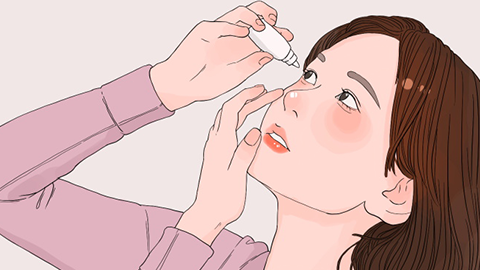
Patients are advised to adopt healthy visual habits: avoid prolonged near-work, limit extended screen time, maintain ocular hygiene, and ensure adequate sleep. We hope this information proves helpful.


