


How to Differentiate Glaucoma from Astigmatism

Glaucoma and astigmatism are both common ophthalmic conditions, yet they are fundamentally different. So, how can one distinguish between glaucoma and astigmatism?
How to Distinguish Glaucoma from Astigmatism
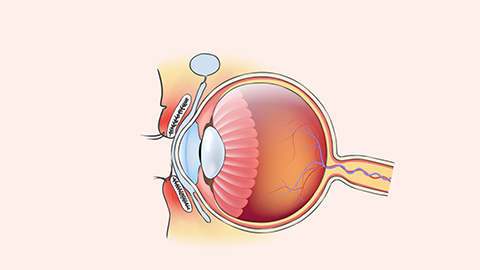
Astigmatism is a type of refractive error, whereas glaucoma is a serious ocular disease. Glaucoma results from disruption of the aqueous humor circulation—caused by various factors—leading to elevated intraocular pressure (IOP), which ultimately damages the optic nerve and may cause irreversible blindness. Vision loss caused by glaucoma is irreversible. In contrast, astigmatism is a refractive error arising from unequal curvatures along different meridians of the eye; consequently, light rays fail to focus precisely on the retina. For example, while a normal eye is spherical, an eye with astigmatism is often elliptical rather than perfectly round.

Thus, the major axis of this ellipse may be horizontal, vertical, or oblique, necessitating precise axis alignment when prescribing corrective lenses for astigmatism. Importantly, astigmatism itself involves only a refractive anomaly—not structural disease affecting the retina or optic nerve. Therefore, it can be fully corrected with appropriately prescribed spectacles or contact lenses, enabling clear vision. This stands in stark contrast to glaucoma.
The clinical signs differ markedly between the two conditions. Glaucoma patients may exhibit corneal edema, shallow anterior chamber, and optic nerve atrophy, among other findings. In contrast, the primary manifestation in astigmatism is a refractive examination revealing significant astigmatic error. We hope this explanation proves helpful.


