


What Causes Astigmatism in Children?

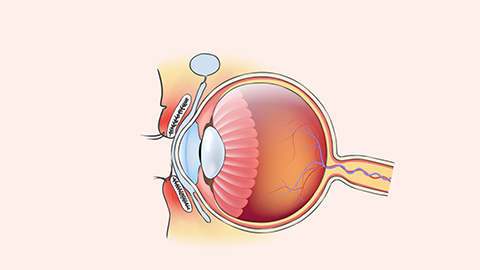
Astigmatism in children typically refers to an abnormal development of the eyeball, deviating from the typical spherical shape. When light passes through the eye, there is a significant difference in refractive power across two or more meridians.
What Causes Astigmatism in Children?
Astigmatism in children is usually determined by congenital developmental factors, primarily resulting from irregular corneal shape. In approximately 90% of pediatric astigmatism cases, the underlying cause is a congenital developmental anomaly—specifically, abnormal corneal morphology arising during embryonic development. If corneal development proceeds unevenly or incompletely, it may lead to topographic irregularities on the cornea, manifesting as peaks and valleys on corneal topography maps. In such cases, incoming external light rays are refracted in multiple directions before reaching the eye. Consequently, during image formation, light fails to converge precisely onto a single focal point on the retina; instead, it forms a relatively blurred, circular image—resulting in astigmatism. Correction of astigmatism is typically achieved in adulthood through prescription eyeglasses or refractive surgery.

Some children may present with astigmatism at birth due to congenital developmental abnormalities—particularly structural anomalies of the ocular refractive media, such as keratoconus or microphthalmia. Additionally, some children suffer from high myopia that remains under-recognized. In daily life, habitual behaviors—including squinting, reading while lying down, or prolonged smartphone use—may contribute to or exacerbate astigmatism.
Regarding diet, children should consume ample fresh vegetables and fruits, as well as nutrient-rich foods such as milk and eggs. We hope this information proves helpful to you.


