


What Is the Difference Between an Anteverted and a Retroverted Uterus?
Jul 05, 2022
Source: Cainiu Health

Dr. Wang Lianlian
Introduction
Anteverted and retroverted positions of the uterus are anatomical terms; in fact, both anteversion and retroversion represent normal uterine positions. The uterus is an organ shaped somewhat like a palm: when it tilts forward—i.e., toward the abdominal wall—it is termed anteverted; when it tilts backward—i.e., toward the spine—it is termed retroverted.
The normal uterus lies between the bladder and the rectum. Its lower end connects to the vagina and cervix, while the position of its upper portion—the uterine body—is not fixed; it moves anteriorly or posteriorly depending on the degree of bladder and rectal distension, as well as changes in body position (e.g., supine or prone). So, what distinguishes an anteverted (anterior) uterus from a retroverted (posterior) uterus? Let’s explore this further.
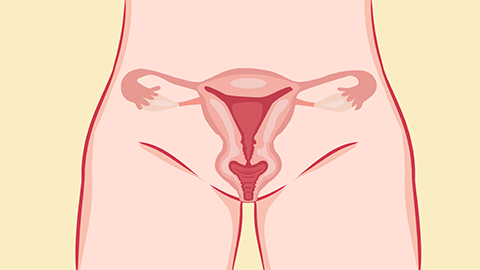
Anteversion and retroversion are anatomical terms describing the orientation of the uterus. In fact, both positions are considered normal. The uterus resembles a palm-shaped organ: when it tilts forward—toward the abdominal wall—it is termed anteverted; when it tilts backward—toward the spine—it is termed retroverted.
A common misconception in the general population holds that a retroverted uterus makes conception more difficult. However, clinical evidence refutes this claim: women with either an anteverted or retroverted uterus—provided there is no underlying pathology—have equal fertility potential and identical chances of conception. Clinically, many gynecological conditions—including endometriosis and adenomyosis—occur irrespective of uterine position; thus, these disorders are unrelated to whether the uterus is anteverted or retroverted.



