Can seborrheic dermatitis of the scalp cause hair loss?
Jul 06, 2022
Source: Cainiu Health

Dr. Liu Wan
Introduction
Seborrheic dermatitis of the scalp is a skin condition primarily caused by excessive sebum production on the scalp. In severe cases, it may lead to hair loss. Clinical manifestations include oily, shiny scalp with abundant scaling; it commonly occurs in areas rich in sebaceous glands. It is a chronic inflammatory disorder arising on the basis of seborrhea, characterized by bright red or yellowish-red scaly patches.
Seborrheic dermatitis of the scalp is a skin condition primarily caused by excessive sebum production from the scalp. In severe cases, it may lead to hair loss. Details are as follows:
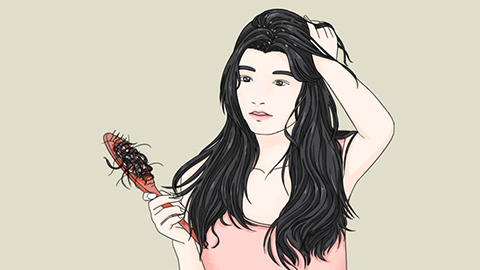
Seborrheic dermatitis refers to hyperfunction of the sebaceous glands, clinically manifesting as excessive scalp oiliness, a shiny and greasy appearance, and prominent scaling. It commonly occurs in areas rich in sebaceous glands and represents a chronic inflammatory condition arising on the basis of seborrhea. Lesions typically appear as bright red or yellowish-red patches covered with greasy scales or crusts, often accompanied by pruritus of varying severity. Initially, lesions present as small, follicular papules that gradually coalesce into yellowish-red plaques of varying sizes, overlaid with greasy scales and crusts. In severe cases, the condition may progress to a mildly exudative, eczematous dermatitis.
Typically, the condition begins with excessive scalp oiliness and dandruff, along with itching. Subsequently, significant hair shedding occurs during combing and shampooing. Hair gradually thins over the vertex and temples, while the scalp in affected areas becomes thinner, smoother, and exhibits progressive follicular atrophy.
Additionally, hair loss may also result from excessive psychological stress, mental overexertion, or excessive consumption of tobacco and alcohol—factors that contribute to internal accumulation of damp-heat. This damp-heat ascends upward, stimulating excessive sebum secretion from the scalp. Under the constant temperature and oxygen-rich environment of the scalp, this excess sebum oxidizes into fatty acids, which are then reabsorbed by the hair follicles. This process damages the follicular epithelial cells and induces ischemia and hypoxia in the deeper perifollicular tissues, ultimately leading to hair loss.