


What causes soreness and pain in the tendons of the popliteal fossa (the area behind the knee)?
Jul 06, 2022
Source: Cainiu Health
Dr. Xu Ge
Introduction
Prolonged maintenance of a single posture can cause pain in the popliteal fossa due to injury of the popliteal fascia. In patients with osteoarthritis, involvement of the surrounding soft tissues may lead to popliteal fossa pain. Additionally, some patients experience popliteal fossa pain secondary to a cyst in this region; enlargement of the cyst may compress adjacent arteries and subcutaneous nerves, resulting in pain—this pain typically resolves once the cyst disappears.
The popliteal fossa—the anatomical region located at the back of the knee—is commonly referred to as the “knee pit.” Pain in this area can arise from various causes, broadly categorized into the following four points.
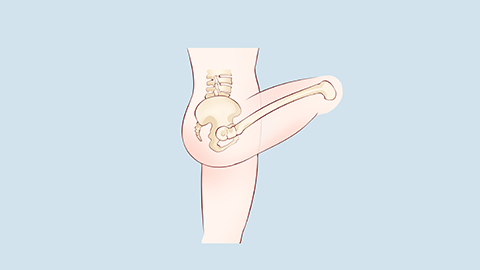
1. Prolonged maintenance of a single posture—such as extended standing or sitting—can lead to popliteal fossa pain, typically resulting from injury to the fascia or surrounding musculature. In such cases, patients are advised to avoid prolonged sitting or standing.
2. Patients with osteoarthritis may experience popliteal fossa pain due to involvement of surrounding soft tissues. Diagnosis is confirmed via X-ray imaging. If the posterior horn of the meniscus is damaged, pain in the popliteal fossa commonly occurs during knee flexion or squatting; magnetic resonance imaging (MRI) is required for definitive diagnosis.
3. Some patients experience popliteal fossa pain secondary to a cyst in this region. As the cyst enlarges, it may compress adjacent arteries and subcutaneous nerves, causing pain. Further evaluation—including imaging and possibly aspiration—is necessary to determine the nature of the cyst. Small cysts may resolve spontaneously or with conservative measures such as gentle massage; however, larger cysts exhibiting progressive growth typically require surgical excision. Pain usually subsides once the cyst is removed.
4. In certain cases, popliteal fossa pain results from deep vein thrombosis (DVT). Anticoagulant and vasodilatory therapy are indicated, along with strict bed rest during treatment, which helps alleviate pain.


