Why does my baby startle frequently while sleeping?
Jul 07, 2022
Source: Cainiu Health

Dr. Xie Zixing
Introduction
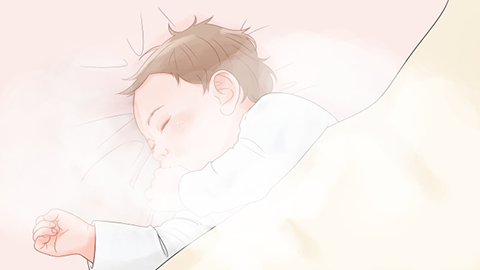
Infants who startle frequently during sleep are often very young—particularly those under three months of age—whose cerebral cortex is still immature, making such startles common. This phenomenon typically improves as the infant grows older. Other possible causes include calcium deficiency, incomplete development of the nervous system, and a lack of security.
It is common for infants to startle frequently during sleep—a phenomenon colloquially known as “sleep-startling.” There are many potential causes. One common reason is the infant’s young age, particularly in babies under three months old, whose cerebral cortex is still immature and therefore more prone to startle responses. This tendency typically improves gradually as the child grows older. Specific causes include the following:
1. Calcium Deficiency
If your baby startles repeatedly during sleep, it is advisable to consult a healthcare provider for evaluation—particularly to assess possible deficiencies in trace elements or calcium. Calcium deficiency is relatively common among infants; however, calcium supplements are generally not recommended for infants aged five months or younger. In such cases, mothers should increase their intake of calcium-rich foods and continue breastfeeding to support the infant’s calcium needs.
2. Immature Nervous System Development
After birth, an infant’s bodily systems—including the nervous system—are still developing. Even during intrauterine development, many physiological functions are only partially established. Consequently, neural pathways and reflex arcs may not yet be fully mature, making infants susceptible to involuntary limb movements or startles in response to even minor auditory stimuli.
3. Lack of Security
A sense of insecurity can also cause restless sleep and frequent startling in infants—especially in those with weaker constitutions, such as preterm infants, who are more easily frightened. After birth, infants transition abruptly from the familiar, confined uterine environment to an entirely new and unfamiliar external world, which may naturally induce anxiety and unease. As a result, they may exhibit frequent startles during sleep.