


Is increased vaginal discharge a sign of ovulation?

Vaginal discharge is influenced by hormones secreted by the ovaries in women—particularly cervical mucus, which is produced by glands in the cervix. Its quantity and quality undergo cyclical changes throughout the menstrual cycle. So, does increased vaginal discharge indicate ovulation?
Does increased vaginal discharge mean ovulation?
Increased vaginal discharge does not necessarily indicate ovulation. There are two main scenarios for increased discharge. First, during ovulation, discharge typically appears white or transparent and has a viscous, stretchy consistency—ideal for facilitating sperm transport and fertilization. Second, abnormal increases in discharge—especially if it is yellowish and foul-smelling—suggest possible gynecological inflammation rather than ovulation. In such cases, prompt medical evaluation at a hospital is recommended.
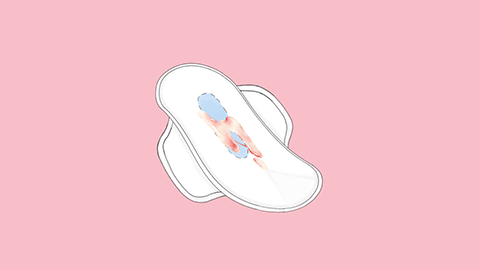
During ovulation, vaginal discharge becomes thin and transparent. After menstruation ends, the previously dry vulvar area gradually becomes moist. As ovulation approaches, estrogen secretion peaks, resulting in maximal production of cervical mucus. At this time, the mucus also reaches its greatest elasticity—often appearing as stringy, thread-like strands that can be stretched to considerable lengths. This is when the vulvar area feels most moist.
Ovulation is associated with characteristic changes in vaginal discharge. Normally, fertile cervical mucus resembles raw egg white and exhibits high elasticity—stretching easily without breaking. Peak stretchiness typically occurs within a 48-hour window around the day of ovulation. Generally, ovulation occurs approximately two weeks before the onset of the next menstrual period. After release from the ovary, the egg remains viable in the fallopian tube for one to two days, awaiting fertilization. Meanwhile, sperm retain their fertilizing capacity in the female reproductive tract for 2–3 days. Consequently, the highest likelihood of conception occurs in the few days surrounding ovulation—both before and after the egg is released. We hope this information is helpful. Wishing you good health and happiness!


