


How to Test Whether You Have Bad Breath

Today, people place great importance on their health. However, due to various factors, their health may be compromised, leading to a suboptimal or “sub-health” state. For instance, some individuals constantly notice an unpleasant odor in their mouth. Upon examination, a physician may diagnose this as halitosis (bad breath). So, how can one self-assess whether they have halitosis?
How to Self-Assess for Halitosis
Individuals who suspect they have halitosis can perform a simple self-evaluation while brushing their teeth—specifically by observing whether their tongue coating appears thickened. A thick, greasy tongue coating often indicates the presence of halitosis. Sometimes, individuals themselves may not detect the odor, yet family members, friends, or other close contacts may perceive it more readily and may even point it out. The primary causes of halitosis are closely linked to periodontal diseases, such as early-stage gingivitis and advanced periodontitis. Additionally, poor oral hygiene and the presence of periodontal pockets also contribute significantly to halitosis. Therefore, patients are advised to seek timely medical evaluation; a healthcare provider can confirm the presence of halitosis and determine its underlying cause through appropriate diagnostic tests. During the visit, patients are generally advised to schedule an appointment with the periodontal department. However, some comprehensive hospitals may not have a dedicated periodontal department and instead offer only a general dentistry or stomatology department.
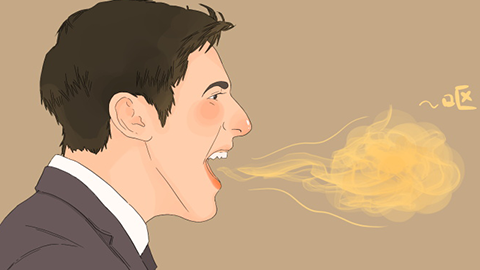
To test for halitosis, one can gently scrape the tongue coating using a spoon—starting from the base of the tongue and moving forward toward the tip—and repeat this 2–3 times. Then, hold the spoon beneath the nose and inhale. If an unpleasant odor is detected, halitosis is likely present. Alternatively, one can cup the palm of the hand in front of the lips and exhale into it. Immediately afterward, bring the palm to the nose and inhale. If an odor is perceived, halitosis is likely present. If uncertainty remains, asking another person to directly smell the breath is a reliable method for confirmation. Should halitosis be confirmed, prompt consultation with a qualified hospital’s dental or stomatology department is recommended to evaluate whether gingival inflammation is present—and if so, appropriate treatment should be initiated.

If halitosis is ruled out by the dental or stomatology department, patients should consider visiting the respiratory medicine or gastroenterology department at a reputable hospital to investigate potential systemic causes of pathological halitosis. We hope this information proves helpful.


