


How to treat flat warts on the face
Aug 09, 2022
Source: Cainiu Health

Dr. Liu Wan
Introduction
Facial flat warts can be treated with topical medications. Physical modalities—including electrocautery, cryotherapy, and infrared coagulation laser—may also be employed. For larger flat warts, surgical excision is an option. Concurrently, patients should pay attention to their diet: avoid excessively greasy and spicy foods to prevent pruritus and subsequent infection.
You have developed numerous flat warts on your face—a truly distressing situation. This skin condition significantly compromises one’s appearance; after all, the face is the first thing others notice about us, and discovering such lesions there can be deeply unsettling. So, how are flat warts on the face treated?
How to Treat Flat Warts on the Face
Flat warts on the face can be treated with topical medications. Physical modalities—including electrocautery, cryotherapy, and infrared coagulation laser therapy—are also effective options. For larger or more resistant flat warts, surgical excision may be considered. During treatment, patients should pay attention to their diet: avoid excessively greasy and spicy foods, as these may trigger pruritus (itching) and increase the risk of secondary infection. Moreover, since flat warts are predominantly caused by human papillomavirus (HPV) infection—most commonly affecting children and young adults—and are highly contagious, patients should avoid close contact with others, especially direct contact with individuals who have flat warts, to prevent cross-infection.
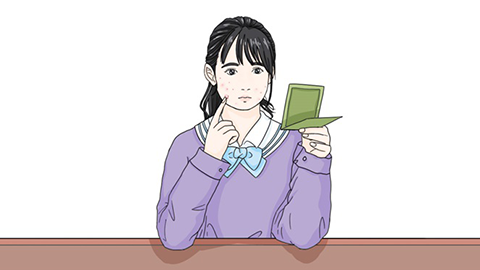
Flat warts are primarily caused by infection with human papillomavirus (HPV). Their etiology is closely associated with HPV infection, which may occur via either direct or indirect transmission. HPV infection is the principal cause of transmission. Additionally, the onset and clinical course of warts may be linked to impaired host immune function.

Patients are advised to maintain good personal hygiene and avoid sharing household items with others. They should adhere to regular work and rest schedules and avoid exposure to ultraviolet (UV) light and ionizing radiation. We hope this information proves helpful to you.


