


What should I do if my wisdom tooth is covered by gum tissue?

Many people have wisdom teeth, yet most pay little attention to them—until inflammation occurs. Although many have heard of wisdom teeth and know they exist, few truly understand them or their specific clinical implications. So, what should be done when a wisdom tooth is covered by gum tissue?
What to Do When a Wisdom Tooth Is Covered by Gum Tissue
When a wisdom tooth remains embedded in the gum and fails to erupt, imaging (e.g., X-ray or panoramic radiograph) is recommended to assess its position and orientation. If the tooth is positioned vertically and aligned normally, it typically exerts minimal impact on the adjacent second molar once fully erupted; in such cases, a minor surgical procedure—removal of the overlying soft tissue (operculectomy)—may facilitate eruption. However, if radiographic imaging reveals mesial or distal impaction, even partial eruption may compromise the second molar. Such impacted wisdom teeth are generally nonfunctional and should be extracted promptly.
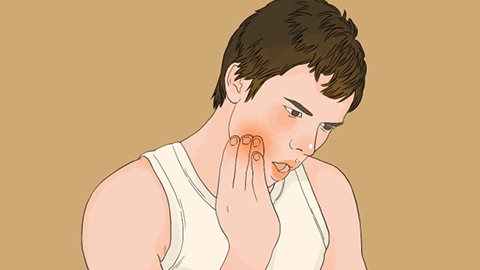
When a wisdom tooth is covered by gum tissue and causes significant pain, it may indicate pericoronitis—an inflammatory condition affecting the gum flap surrounding a partially erupted wisdom tooth. In such cases, antibiotics—such as cephalosporins or nitroimidazoles—may be prescribed to control infection and alleviate pain. Following extraction, antibiotics may be continued for approximately 3–5 days, per the clinician’s recommendation, to prevent postoperative infection. Maintaining excellent oral hygiene is essential during pericoronitis: brush teeth thoroughly twice daily and rinse with warm saline after meals to suppress bacterial growth and help resolve inflammation.

During wisdom tooth eruption, consuming heat-clearing and detoxifying foods—such as bitter melon, honeysuckle, or mung bean soup—may help reduce internal “heat” (a traditional concept associated with inflammation), thereby easing discomfort. We hope this information proves helpful.


