


Does Liu Wei Di Huang Wan treat yin deficiency or yang deficiency?

Liu Wei Di Huang Wan (Six-Ingredient Rehmannia Pill) is a commonly kept herbal remedy in many households and offers significant health benefits. It can enhance immune function and help lower blood lipid and glucose levels. More commonly, people take Liu Wei Di Huang Wan to support kidney health—specifically to alleviate symptoms associated with kidney deficiency. As we know, kidney deficiency is broadly categorized into two patterns: kidney yin deficiency and kidney yang deficiency. So, does Liu Wei Di Huang Wan treat yin deficiency or yang deficiency?
Does Liu Wei Di Huang Wan Treat Yin Deficiency or Yang Deficiency?
Liu Wei Di Huang Wan is a classic formula specifically designed for treating kidney yin deficiency. It employs three nourishing herbs—Rehmannia root (Shu Di Huang), Asiatic cornel fruit (Shan Zhu Yu), and Chinese yam (Shan Yao)—to replenish kidney yin, liver yin, and spleen yin. Additionally, three “clearing” herbs—tree peony bark (Mu Dan Pi), poria (Fu Ling), and alisma (Ze Xie)—are included to prevent excessive richness or stagnation. Importantly, Liu Wei Di Huang Wan is not a kidney-yang tonifying or “yang-strengthening” formula; for kidney yang deficiency, warming and yang-invigorating herbs are required. Liu Wei Di Huang Wan primarily nourishes liver and kidney yin—including spleen yin—and is indicated for kidney yin deficiency presenting with dizziness, tinnitus, soreness and weakness of the lower back and knees, tidal fever with bone-steaming sensations, night sweats, seminal emission, and thirst. It is used exclusively to supplement kidney yin—not kidney yang.
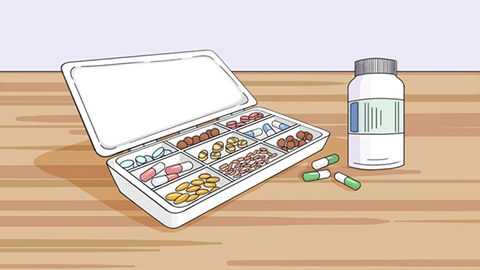
Liu Wei Di Huang Wan is a widely used tonic traditional Chinese medicine in clinical practice. Functionally, it exerts predominantly yin-nourishing effects and is suitable for patients with liver-kidney yin deficiency. Such patients typically present with low back and knee soreness, tidal fever, night sweats, thirst, excessive drinking, and dark yellow urine. If a patient exhibits yin deficiency, this formula may be taken under the guidance of a qualified TCM practitioner. However, if the patient has yang deficiency, Liu Wei Di Huang Wan is contraindicated—as its cold-natured, yin-tonifying properties may exacerbate yang-deficient symptoms. Clinically, yang deficiency commonly manifests as cold limbs, aversion to cold, fatigue, lethargy, and even loose stools or diarrhea. In such cases, kidney-yang tonifying and warming herbs should be prescribed.
Patients are advised to actively pursue appropriate therapeutic interventions and pay closer attention to dietary hygiene to avoid unnecessary complications. We hope this explanation proves helpful to you.


