


Must subgingival calculus be removed?

Dental calculus (tartar) appears as yellowish deposits adhering to tooth surfaces. It not only adversely affects one’s appearance but may also lead to gingival recession, tooth mobility, and other oral health problems. Routine brushing is generally insufficient to remove dental calculus. Mild cases can often be managed with daily oral hygiene practices; however, more severe accumulations require professional dental cleaning at a clinic or hospital. So, must subgingival calculus be removed?
Must Subgingival Calculus Be Removed?
Yes, subgingival calculus must be removed. Subgingival calculus lies beneath the gumline and is invisible to the naked eye—typically appearing brown or black—and exhibits stronger adhesion than supragingival deposits. Moreover, it readily adsorbs bacterial toxins and irritates periodontal tissues, impeding healing of intra-gingival ulcers and potentially causing gingival bleeding, progression of periodontal disease, halitosis, periodontal pocket formation, tooth mobility, and even tooth loss. Initially, calculus forms as a soft, milky-white biofilm (dental plaque), which can be removed with regular brushing or flossing. However, once fully mineralized, it becomes significantly more difficult to eliminate. At this stage, calculus accumulates and proliferates at the junction of teeth and gums, progressively expanding in size, thickness, and hardness.
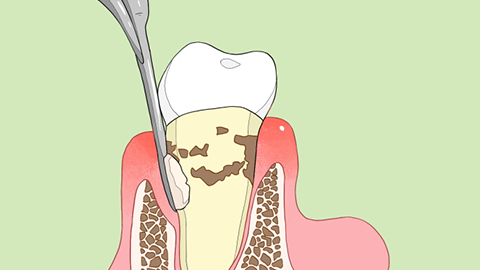
Calculus may form either above or below the gumline due to the presence of connective tissue between teeth and gums. When this connective tissue is damaged—for example, resulting in periodontal pocket formation—calculus, bacteria, and other debris may invade the subgingival space and accumulate on root surfaces. To remove such subgingival calculus, ultrasonic scaling alone is inadequate; subgingival scaling and root planing are required. This procedure typically involves manual instrumentation using Gracey curettes or specialized periodontal treatment devices.

Patients experiencing symptoms associated with dental calculus should seek timely professional dental care. We hope this information has been helpful to you.


