


What is the best treatment for athlete’s foot?

Athlete’s foot (tinea pedis) is a common fungal infection. Wearing poorly ventilated shoes and socks—especially when feet remain frequently damp—can predispose individuals to this condition. The disease is also contagious; sharing footwear or socks with an infected person may lead to transmission. Patients with athlete’s foot require prompt and active treatment, and foot soaks can help alleviate symptoms. So, what are the best options for treating athlete’s foot?
What Is Effective for Treating Athlete’s Foot?
Since athlete’s foot is caused by fungi, antifungal medications—those capable of killing or inhibiting fungal growth—are the preferred treatment. Some individuals rely solely on anti-itch medications; although these may temporarily relieve symptoms, they do not eradicate the underlying fungal infection, leading to rapid recurrence—and sometimes even worsening of the infection. Additionally, if secondary bacterial infection or severe adverse reactions develop at the affected site, anti-inflammatory therapy should be prioritized initially.

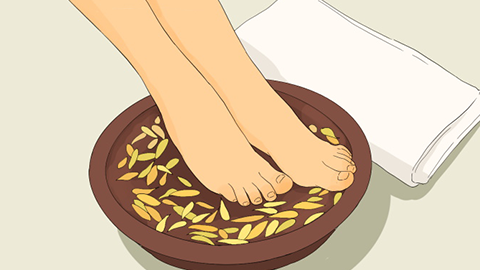
Patients with athlete’s foot may prepare a foot soak using sliced white radish: place the slices in a pot, add an appropriate amount of water, bring to a boil over high heat for 3 minutes, then reduce to low heat and simmer gently for 5 minutes. After turning off the heat, allow the solution to cool until it reaches a comfortably warm (non-scalding) temperature, then soak the feet for 30 minutes per session. Repeating this daily for two weeks may effectively alleviate athlete’s foot. Alternatively, patients may soak their feet in a decoction made from soybeans. To prepare: rinse and grind the soybeans, place them in a clay pot with an appropriate amount of water, bring to a boil over high heat, then reduce to low heat and simmer for 20 minutes. Once the liquid has cooled sufficiently to avoid scalding, use it for a foot soak.
In daily life, patients should maintain a positive mindset, actively cooperate with healthcare providers, take prescribed medications consistently and as directed, and pay close attention to routine foot care—thereby promoting faster symptom improvement. We hope this information proves helpful.


