


Which is the meniscus?

In fact, the medial and lateral menisci are located on the articular surface of the tibia and are commonly referred to as “menisci.” The peripheral edges of the menisci are relatively thick and must be firmly attached to the joint capsule. In contrast, the central portion is comparatively thin and lies freely within the joint space. So, what exactly are the menisci?
What Are the Menisci?
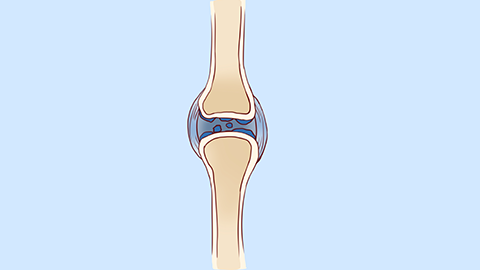
The menisci are crescent-shaped fibrocartilaginous structures situated within the knee joint cavity—specifically between the medial and lateral femoral condyles and the tibial plateau. They consist of two distinct components: the medial meniscus and the lateral meniscus. Functioning primarily as shock absorbers, they help distribute mechanical stress across the knee joint. However, they are particularly vulnerable to injury during twisting motions of the knee. In young individuals, many sports-related injuries result in meniscal tears. Such tears can cause “joint locking”—a sudden, painful inability to fully extend or flex the knee—often followed by spontaneous resolution after a period of movement, allowing motion to resume.
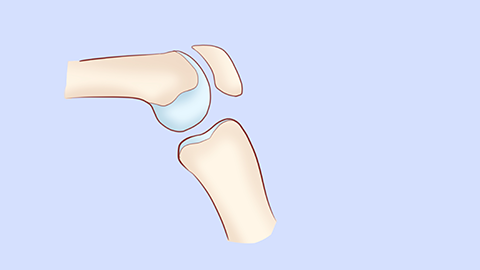
The menisci are fibrocartilaginous structures within the knee joint, divided into medial and lateral portions. The medial meniscus is larger and C-shaped, whereas the lateral meniscus is smaller and more circular (O-shaped), granting it greater mobility. The posterior half of the medial meniscus is anchored to the deep fibers of the medial collateral ligament. Both the superior and inferior surfaces of the menisci are covered by synovial membrane. Their cross-sectional shape is wedge-like, conforming precisely to the geometry of the tibial articular surface—thereby enhancing knee joint stability.
In daily life, patients should maintain a positive mindset, actively cooperate with their physicians during treatment, take prescribed medications regularly and in correct dosages, and pay close attention to routine self-care—so that their condition improves as rapidly as possible. We hope this explanation has been helpful to you.


