


Can povidone-iodine be applied to wounds?
Jan 24, 2025
Source: Cainiu Health

Dr. Liu Wenmin
Introduction
In general, povidone-iodine can be applied to wounds. However, consultation with a physician is recommended before use. Povidone-iodine is a safe and effective disinfectant with broad-spectrum antimicrobial properties. It contains iodine, an element with strong oxidizing capabilities. Upon contact with microorganisms such as bacteria and viruses, it rapidly disrupts cellular structures, including oxidizing the active groups of microbial protoplasmic proteins.
Generally speaking, povidone-iodine can be used on wounds. However, it is recommended to consult a doctor before use. Detailed explanation is as follows:
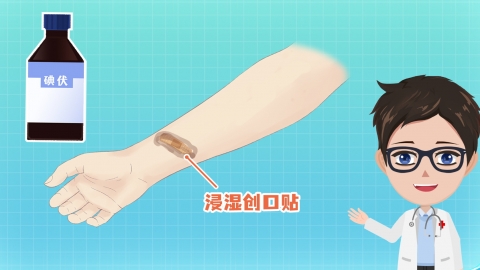
Povidone-iodine is a safe and effective disinfectant with broad-spectrum antimicrobial properties. It contains iodine, which has strong oxidizing properties. When it comes into contact with microorganisms such as bacteria and viruses, it rapidly destroys their cellular structures, including oxidizing the active groups of protoplasmic proteins. After oxidation, the physiological processes of microorganisms, such as protein synthesis and enzyme activity, are severely disrupted, leading to their death. Therefore, applying povidone-iodine to wounds can effectively kill surrounding bacteria, viruses, and fungi, reducing the risk of infection.
In addition, povidone-iodine causes relatively little irritation and can be directly applied to wounds. Upon contact with the wound, it evaporates quickly, leaving behind iodide that forms a thin film on the skin surface, providing sustained disinfectant action. This film protects the wound from external bacterial invasion and simultaneously promotes wound healing.
After applying povidone-iodine, the wound should be kept dry to avoid bacterial growth in moist environments. Friction and pressure on the wound should also be minimized to prevent increased pain and risk of infection.



