


How far can a newborn see?

Generally, newborns have weak vision at birth and can typically only see objects within a distance of about 20-30 centimeters. A detailed explanation is as follows:
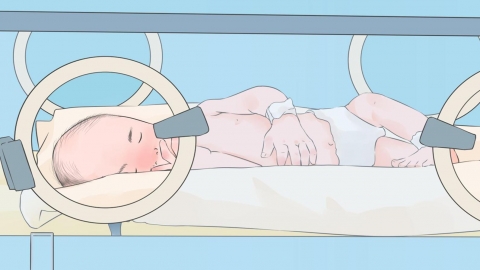
When a newborn is in a quiet, awake state, such as just after waking up with focused eye contact, the visual system's sensitivity to light and objects is relatively higher. At this time, the baby is more likely to see objects at a distance of 30 centimeters, especially showing a stronger response to high-contrast visual stimuli such as faces or black-and-white patterns.
Conversely, when a newborn is tired, hungry, or drowsy, the underdevelopment of the visual system becomes more apparent. The eye muscles have limited adjustment capability, and the distance at which objects can be seen clearly may shorten to about 20 centimeters. Additionally, the infant's visual attention to the surrounding environment is brief.
As the newborn ages, visual sensitivity gradually improves, allowing for the discrimination of more subtle changes in color and shape. Moreover, an infant's vision develops progressively each month, with visual acuity increasing at a rate of approximately 30 centimeters per month. Throughout this developmental process, providing rich visual stimuli—such as reading books and observing toys of different colors and shapes—can help promote visual development.


