


Can hemorrhoids cause stools to become narrower?
Jul 01, 2025
Source: Cainiu Health

Dr. Li Jingxiang
Introduction
In general, if hemorrhoids are internal but relatively small, or if they are external hemorrhoids, they usually do not cause narrowing of the stool. However, larger internal hemorrhoids may lead to thinner stools. If discomfort occurs, it is recommended to seek timely treatment at a reputable hospital. If symptoms such as persistent stool thinning, difficulty defecating, or blood in the stool occur, prompt medical attention is necessary to rule out serious conditions such as rectal tumors.
Generally, if hemorrhoids are internal but relatively small, or if they are external hemorrhoids, they usually do not cause narrowing of the stool. However, larger internal hemorrhoids may lead to thinner stools. If discomfort occurs, it is recommended to seek timely treatment at a reputable hospital. Detailed explanations are as follows:
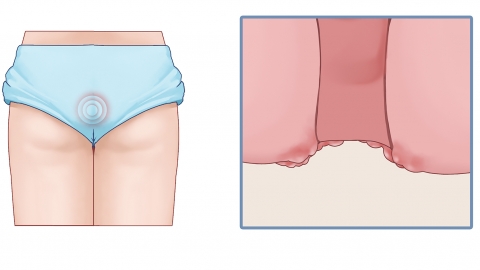
When hemorrhoids are small internal or external types, they typically do not cause the stool to become narrow. Small internal hemorrhoids are located above the dentate line and, due to their limited size, occupy minimal space within the rectal cavity, thus having little effect on the shape of passing stool. External hemorrhoids grow below the dentate line, outside the anal canal, and do not directly influence the shaping of stool within the rectal lumen. As such, they do not compress or deform the stool, so the thickness and shape of the stool remain largely normal during defecation, without noticeable narrowing.
However, larger internal hemorrhoids can indeed cause the stool to become narrower. As internal hemorrhoids progress and the hemorrhoidal mass enlarges, it protrudes into the rectal cavity, causing the originally regular intestinal lumen to narrow. When stool passes through the rectum and anal canal, it is compressed by the enlarged hemorrhoid, similar to how water flow becomes narrower when passing through a constricted pipe. This compression alters the stool's shape, causing it to become thinner or flatter. Moreover, the degree of stool thinning often becomes more pronounced as the internal hemorrhoid continues to enlarge, and may be accompanied by other symptoms such as difficulty in defecation or rectal bleeding.
If persistent stool thinning, difficulty in defecation, or blood in the stool occurs, timely medical consultation is necessary to rule out serious conditions such as rectal tumors. Diagnosis can be confirmed through digital rectal examination and colonoscopy. In daily life, maintaining a high-fiber diet, avoiding prolonged sitting, and reducing the risk of hemorrhoid flare-ups are recommended.





