


How many times does roseola occur in infants and young children?
Sep 05, 2025
Source: Cainiu Health

Dr. Zhou Xiaofeng
Introduction
In general, most infants and young children experience roseola only once. However, a small number may develop two or more episodes, typically due to infection with different viral subtypes or weakened immunity; such cases are relatively rare. During the period of roseola, it is important to ensure the child gets adequate rest, stays well-hydrated, and avoids being overwrapped, which may interfere with heat dissipation. If fever occurs, appropriate measures should be taken to reduce body temperature based on the severity of the fever.
In general, most infants and young children experience roseola only once. However, a small number might develop roseola two or more times due to infection with different viral subtypes or weakened immunity. This kind of situation, though, is relatively rare. Detailed analysis is as follows:
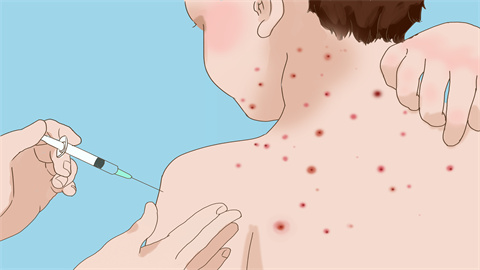
Roseola in infants and young children is mainly caused by infection with human herpesvirus 6 (HHV-6), and in some cases by human herpesvirus 7 (HHV-7). After infection with one of these viruses, the body produces corresponding antibodies, acquiring long-lasting immunity. The probability of reinfection with the same viral subtype is extremely low afterward, which is why most infants and young children will only experience roseola once.
In rare cases, if an infant first develops roseola caused by HHV-6 virus and subsequently becomes infected with HHV-7 virus, similar roseola symptoms may appear again. Additionally, infants with particularly weak immune systems may have insufficient antibody production or declining antibody levels, which could result in a minimal chance of reinfection with the same viral subtype, although this situation is even more uncommon.
During the period of developing roseola, infants should ensure adequate rest, drink plenty of water, and avoid being overdressed, which could impair heat dissipation. If fever occurs, appropriate fever-reducing measures can be taken according to the body temperature. After the rash subsides, the body usually recovers relatively quickly.


