


What Are the Severe Cervical Erosion Cancer Warning Signs?
Nov 24, 2021
Source: Cainiu Health

Dr. Zhang Lu
Introduction
Cervical erosion refers to ectopic cervical columnar epithelium. In severe cases, signs suggestive of malignant transformation may include contact bleeding, abnormal vaginal discharge, pain, urinary frequency and urgency, and an abdominal mass. Patients should seek medical evaluation at a hospital and undergo symptom-directed treatment under the guidance of a physician. During treatment, maintaining a positive mood and avoiding excessive emotional fluctuations is recommended.
Cervical erosion refers to ectopic cervical columnar epithelium. In severe cases of cervical columnar epithelial ectopy, warning signs of malignant transformation may include contact bleeding, abnormal vaginal discharge, pain, urinary frequency and urgency, and an abdominal mass. Patients should seek medical attention promptly and undergo symptom-directed treatment under a physician’s guidance. The following outlines these signs in detail:
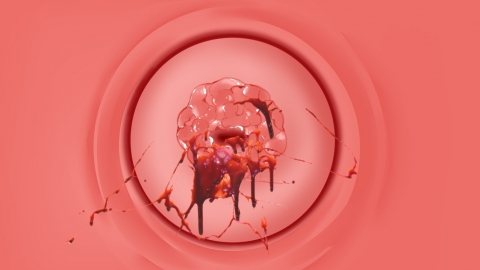
1. Contact bleeding: In cases where severe cervical columnar epithelial ectopy undergoes malignant transformation, cervical tissue becomes fragile. During sexual intercourse or gynecological examinations—activities involving physical contact—the superficial blood vessels of the cervix are easily injured, resulting in bleeding. This occurs because cancer cells disrupt the normal cervical tissue architecture; newly formed tumor vasculature is inherently fragile and lacks the elasticity and contractile capacity of healthy vessels, making even minor mechanical stimulation sufficient to cause vascular rupture and hemorrhage.
2. Abnormal vaginal discharge: Malignant transformation leads to functional disturbances in cervical cells and altered secretory activity of cervical glands. Additionally, necrosis and shedding of cancerous tissue mix with vaginal secretions, causing changes in their volume, color, consistency, and odor. Normally, vaginal discharge is clear or white, moderate in quantity, and odorless. Following malignancy, however, discharge may increase significantly, becoming either watery and thin or thick and curd-like—or even purulent. Its color may turn yellowish or brownish, sometimes streaked with blood, and its odor may become foul.
3. Pain: In early-stage cervical cancer, pain is often minimal due to the relatively sparse nerve supply in the cervix. As the disease progresses and the tumor invades adjacent structures—including parametrial tissues, pelvic sidewalls, and nerves—pain develops. Nerve compression may cause radiating pain; ligament infiltration results in traction-type pain; and involvement of the pelvic sidewall typically produces persistent lower abdominal or lumbosacral pain.
4. Urinary frequency and urgency: The cervix lies in close proximity to the bladder. As the cervical tumor enlarges and extends anteriorly into the bladder, it impairs normal bladder function. Irritation of the bladder mucosa triggers sensations of urinary frequency and urgency—similar to a reduced bladder capacity, wherein even small volumes of urine provoke a strong urge to void.
5. Abdominal mass: As cervical cancer advances, the tumor may grow substantially, becoming palpable as an abdominal mass. This results from continuous proliferation of neoplastic tissue, forming a distinct space-occupying lesion. If the tumor extends intraperitoneally or infiltrates and envelops parametrial tissues, a clinically detectable abdominal mass may develop.
If cervical cancer has been definitively diagnosed, prompt hospital referral is essential for appropriate intervention—such as cesarean hysterectomy, radical hysterectomy, or resection of a rudimentary uterine horn—depending on clinical indications. Throughout treatment, patients should maintain a positive emotional state and avoid excessive emotional stress.


