


Standard for Gallbladder Stone Size
Mar 29, 2022
Source: Cainiu Health

Dr. Jin Zhongkui
Introduction
Generally, for asymptomatic patients with gallstones, a stone size of 3 cm is commonly used as the threshold for gallbladder stones. In asymptomatic patients with gallbladder stones larger than 3 cm in diameter, laparoscopic cholecystectomy or gallbladder-preserving lithotomy should be considered. In some middle-aged and elderly patients, the stones may be particularly large.
In general, asymptomatic gallstones do not require intervention. However, surgical cholecystectomy is indicated if the gallstone exceeds 2 cm in diameter or if complications arise. For acute cholecystitis unresponsive to conservative management, open cholecystectomy is typically performed—though this approach entails greater surgical trauma and bodily disruption. So, what is the standard size threshold for gallstones? Below, we address this question.
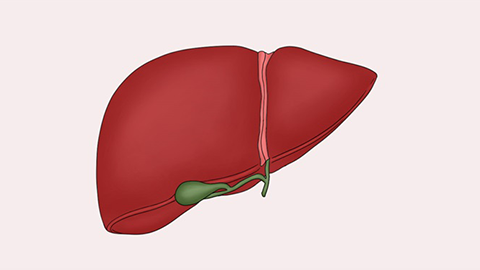
Standard Size Threshold for Gallstones
Generally, for patients with asymptomatic gallstones, a diameter of 3 cm serves as the clinical size threshold. If an asymptomatic gallstone exceeds 3 cm, laparoscopic cholecystectomy—or, alternatively, gallbladder-preserving stone extraction—should be considered.
This recommendation stems from the fact that, in some middle-aged and elderly patients, large gallstones may repeatedly abrade the gallbladder wall, thereby increasing the risk of gallbladder malignancy. Moreover, in patients with recurrent cholecystitis, laparoscopic cholecystectomy is recommended regardless of gallstone size.
Additionally, in patients who develop biliary pancreatitis, prompt hospitalization is required. After complete resolution of pancreatitis, laparoscopic cholecystectomy should be scheduled approximately one month later.
We hope the above information is helpful to you.







