What Are the Symptoms of Hemorrhoids in Women?
Mar 31, 2022
Source: Cainiu Health

Dr. Cheng Yicheng
Introduction
What Are the Symptoms of Hemorrhoids in Women?
I. Rectal bleeding: In early-stage internal hemorrhoids, the primary symptoms include spurting bleeding, dripping blood, or blood on the fingers after wiping. The blood is typically bright red. External hemorrhoids generally do not cause bleeding.
II. A sensation of heaviness or dragging pain: This is often the main symptom of external hemorrhoids. Internal hemorrhoids are usually painless unless inflamed; however, a heavy, dragging pain commonly occurs with infected, strangulated, or gangrenous internal hemorrhoids—and may lead to severe, intense discomfort.
Hemorrhoids are a common condition encountered in anorectal surgery, primarily caused by downward displacement of the anal cushions and varicosity of the hemorrhoidal venous plexus. Based on their anatomical location relative to the dentate line, hemorrhoids are classified as internal, external, or mixed. So, what are the symptoms of hemorrhoids in women? Let’s explore them together.
Symptoms of Hemorrhoids in Women
The main symptoms of hemorrhoids in women include the following:
1. Rectal bleeding: In early-stage internal hemorrhoids, the predominant symptom is bleeding—often presenting as jet-like, dripping, or streaked blood on toilet paper or fingers. The blood is typically bright red. External hemorrhoids generally do not cause bleeding.
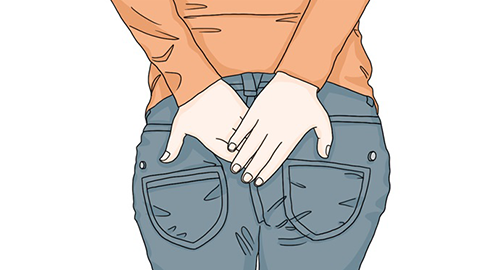
2. Dragging or throbbing pain: This is a hallmark symptom of external hemorrhoids. Internal hemorrhoids are usually painless unless complicated by infection, strangulation, or gangrenous necrosis—conditions that frequently provoke severe dragging or throbbing pain.
3. Prolapse: Prolapse is characteristic of moderate-to-advanced internal hemorrhoids. It results from progressive enlargement of the hemorrhoidal nodules, causing separation of the mucosa and submucosal layers from the underlying anal canal musculature. During defecation, these nodules descend below the dentate line and protrude beyond the anal verge.
4. Anemia: Chronic, recurrent hemorrhoidal bleeding may lead to iron-deficiency anemia. Early signs in women often include fatigue, low energy, and easy exhaustion. As anemia progresses, patients may develop pallor, lethargy, generalized weakness, loss of appetite, palpitations, tachycardia, dyspnea upon exertion, and peripheral edema. Pruritus and perianal eczema may also occur.
Additionally, repeated prolapse in advanced hemorrhoids can cause anal sphincter relaxation and increased secretion, resulting in persistent perianal moisture and soiling—predisposing to eczema and associated pruritus.
We hope the above information is helpful. Wishing you good health and happiness!