What should I do about a 9-mm ureteral stone?
Apr 01, 2022
Source: Cainiu Health

Dr. Wang Jianlong
Introduction
Treatment of a 9-mm Ureteral Stone: A 9-mm ureteral stone (i.e., less than 1 cm) is theoretically small enough to pass spontaneously through the body’s natural passages. Patients should increase fluid intake, urinate frequently, and engage in regular physical activity and exercise. Additionally, adjunctive oral therapy with tamsulosin hydrochloride (e.g., Flomax®) can effectively relax ureteral smooth muscle and facilitate stone passage.
Ureteral stones belong to the category of upper urinary tract stones, alongside renal stones. Approximately 90% of ureteral stones originate from renal stones. Ureteral stones are a common condition in urology, accounting for 33%–54% of all urinary tract stones, with a global incidence of approximately 4%–15%. In recent years, the incidence has been steadily increasing. So, what should be done for a 9-mm ureteral stone? Below, we address this question.
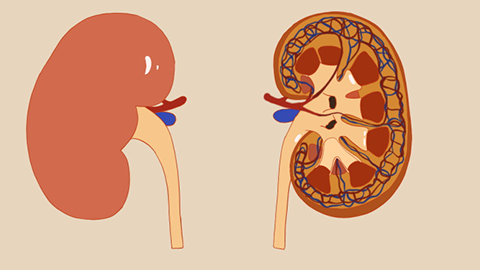
What to Do for a 9-mm Ureteral Stone
For a 9-mm ureteral stone—i.e., less than 1 cm in diameter—spontaneous passage through the natural urinary tract is theoretically possible.
Patients should increase fluid intake, urinate frequently, and engage in regular physical activity and exercise. Concurrently, oral administration of tamsulosin hydrochloride (e.g., Flomax®) may help relax the smooth muscle of the ureter, thereby facilitating stone expulsion. Additionally, traditional Chinese patent medicines such as Lysimachia granules or Shenshitong tablets—which possess diuretic, dampness-resolving, and lithiasis-relieving properties—may also support downward stone passage.
Furthermore, if follow-up imaging after two weeks reveals no downward movement of the stone, conservative management is deemed unsuccessful. In such cases, ureteroscopy with holmium laser lithotripsy is recommended. For proximal ureteral stones, flexible ureteroscopy with holmium laser lithotripsy may be selected. Please note: The above recommendations are for informational purposes only. Specific treatment decisions should strictly follow the instructions provided with each medication or, preferably, be guided by a physician at a qualified medical institution.
We hope the above information is helpful to you.