


How to Treat Blisters on the Hands

If blisters develop on the hands, management should be tailored to the underlying cause. For friction-induced blisters—such as those resulting from manual labor or other mechanical abrasion—simple disinfection with povidone-iodine is usually sufficient. If the blister is large or under high tension, a sterile needle may be used to aspirate the fluid, followed by disinfection with an antiseptic solution or povidone-iodine.
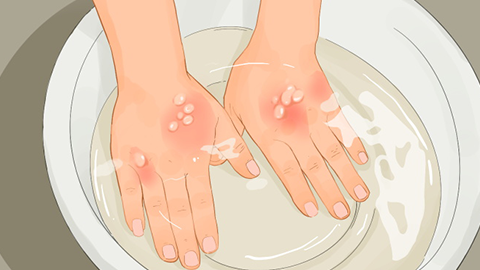
What to Do for Hand Blisters
1. Fluid aspiration: This approach is appropriate when the blister is relatively large—approximately the size of a pea or broad bean. After local disinfection with povidone-iodine or alcohol, a sterile syringe may be used to puncture and drain the blister. However, the blister roof (epidermal layer) must not be peeled off, as doing so would expose raw, reddened tissue and significantly increase infection risk. The blister roof serves as a natural protective barrier over the wound. Over time, the surrounding area will gradually dry, form a scab, and eventually slough off, replaced by newly regenerated skin.
2. Spontaneous absorption: Small blisters on the hands typically resolve spontaneously through natural absorption. The area subsequently forms a scab, which later detaches—thus, specific intervention is generally unnecessary.
If blisters result from infection, topical antimicrobial ointments should be applied—for example, antibacterial ointments for bacterial infections. In cases of burn-related blisters, management depends on blister size: large blisters may require debridement (removal of the blister roof), followed by application of a specialized burn ointment.

If blisters are severe or show signs of complications, prompt medical evaluation at a hospital is strongly recommended, and treatment should be guided by a healthcare professional.


