


How to Treat a Burn That Has Developed Blisters
Apr 21, 2022
Source: Cainiu Health

Dr. Gan Liqiang
Introduction
Regarding the formation of blisters after a burn, some individuals opt to puncture them. In fact, whether or not to drain a burn blister depends on the specific circumstances. Generally, small blisters do not require puncturing—simply keeping the area clean and dry is sufficient. Intact skin serves as an excellent natural barrier against infection; therefore, small blisters are best left untreated to resolve spontaneously and heal on their own.
Minor accidents occasionally occur in daily life, leading to minor injuries. Besides minor bruises, scalds are relatively common—exposure to hot water, for example, often causes blistering of the skin. Improper management may delay healing. So, how should blisters caused by scalds be treated?
How to Manage Blisters Following a Scald
Regarding blister formation after scalding, some individuals opt to puncture them. However, whether or not to drain a scald-induced blister depends on the specific circumstances. Generally, small blisters do not require drainage—simply keeping the area clean and dry is sufficient. Intact skin serves as an effective natural barrier against infection; therefore, small blisters are best left undisturbed to resolve spontaneously.
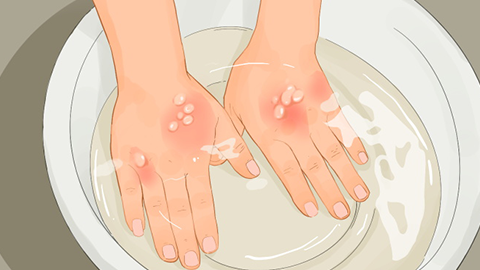
For large blisters, however, careful management is essential. First, disinfect the area locally. Then, either aspirate the fluid using a sterile syringe or use a sterile needle to puncture the blister at its lowest point, allowing fluid to drain. Gently press around the blister with a sterilized cotton swab to facilitate complete drainage—taking care to preserve the overlying blister roof (epidermis). Finally, cover the area with a sterile dressing. Maintain local cleanliness and dryness. With proper care, the blister will rapidly form a scab and heal spontaneously. If the blister becomes contaminated and infected, seek prompt medical attention for professional evaluation and treatment.

Alternatively, cold-water irrigation may be employed: immediately after a scald, remove the affected area from the heat source and rinse continuously under cool running tap water for 15–20 minutes. This helps reduce tissue temperature, alleviate pain, and minimize blister formation—thereby preventing deeper thermal injury to the skin. We hope this information proves helpful.






