


Can eczema be transmitted through contact?

While traveling, we accidentally contracted a viral infection, resulting in numerous eczema lesions on our arms. Can eczema spread through contact?
Can eczema spread through contact?
Eczema is not contagious through contact. It is an intensely itchy inflammatory skin reaction triggered by various internal and external factors, and it can be classified into three stages: acute, subacute, and chronic. The acute stage is characterized by a tendency toward exudation, whereas the chronic stage features infiltration and thickening of the skin. Some patients present directly with chronic eczema, whose lesions are typically polymorphic, symmetrically distributed, intensely pruritic, and prone to recurrence. Fundamentally, eczema is an inflammatory skin disorder driven by hypersensitivity reactions, and therefore it is non-infectious.
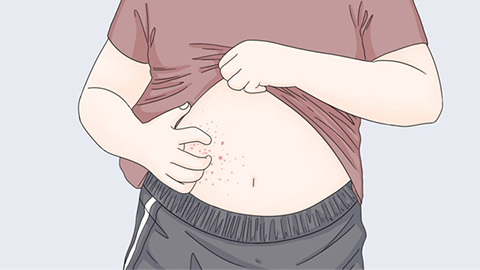
Lesions are polymorphic and symmetrically distributed, accompanied by intense pruritus and frequent recurrence, often progressing to chronicity. As eczema is essentially an allergic (hypersensitivity) reaction, it cannot be transmitted to others. Clinically, the disease is staged as follows: during the acute phase, lesions tend to exude; in the chronic phase, the skin may become thickened, hyperplastic, infiltrated, or scaly. Notably, when exudation is prominent in the acute phase, improper care may lead to erosion and worsening of skin lesions—potentially increasing the affected area.
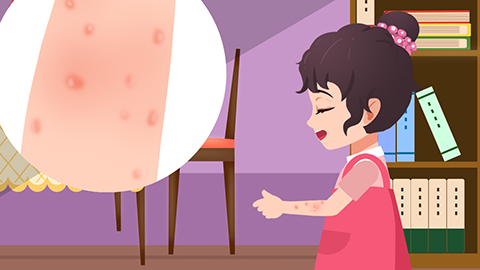
Maintain good skin hygiene in daily life. Apply calamine lotion locally for cleansing and soothing. Avoid scratching the affected areas with your hands to prevent skin breakdown and secondary bacterial infection. We hope this information is helpful to you!


