


What symptoms does muscle twitching or jerking during sleep indicate?

Many individuals experience sudden muscle jerks or twitches while falling asleep during daily life. Since this phenomenon typically does not significantly impact daily functioning, most people choose not to seek treatment. So, what exactly is this “sleep-related twitching or jerking”?
What Symptoms Are Associated with Sleep-Related Twitching or Jerking?
Twitching or jerking during sleep may stem from various underlying conditions, including hypocalcemic seizures and epilepsy. In cases of hypocalcemic seizures, patients may experience limb twitching or jerking during sleep, often accompanied by severe pain. Patients usually remain conscious and do not exhibit symptoms such as urinary incontinence. Medical evaluation typically reveals low serum calcium levels, and calcium supplementation leads to marked symptom improvement.
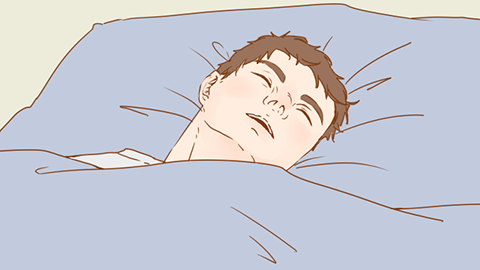
In contrast, epileptic seizures occurring during sleep may cause limb twitching or shaking, frequently accompanied by impaired consciousness and/or urinary or fecal incontinence. Upon awakening, patients typically have no recollection of the seizure episode. To confirm a diagnosis of epilepsy, an electroencephalogram (EEG) is essential to detect abnormal electrical discharges—such as spikes, sharp waves, spike-and-slow-wave complexes, or sharp-and-slow-wave complexes. Frequent nocturnal twitching due to epilepsy primarily results from abnormal neuronal discharges in the brain during sleep. Therefore, both EEG and brain magnetic resonance imaging (MRI) are recommended to identify the underlying cause.
Once diagnosed, appropriate antiepileptic medications—such as phenobarbital, phenytoin sodium, or carbamazepine—can be prescribed based on the specific seizure type and etiology. With effective seizure control, the frequency of sleep-related twitching generally improves significantly. We hope this information has been helpful!


