


Why are my dandruff flakes so large?

As a beloved little fairy, you would never tolerate flaws in your hair quality—especially large, visible flakes of dandruff. So, why does dandruff appear in large chunks?
Why Does Dandruff Appear in Large Flakes?
Large, flaky dandruff may indicate simple pityriasis capitis (also known as dry seborrheic dermatitis). This condition is characterized by diffuse, grayish-white, greasy, bran-like scales on the scalp, often accompanied by itching. Typically, there is no obvious inflammation of the scalp. The disease follows a chronic course and may gradually worsen, potentially leading to hair loss and thinning. Primary contributing factors include genetic predisposition, excessive sebum production, and localized microbial infection—particularly by fungi. Indeed, *Malassezia* species (e.g., *Malassezia furfur*) can be detected in the scalp scales of some affected individuals. Treatment primarily involves antifungal therapy, including topical antifungal shampoos or medicated lotions containing selenium sulfide or ketoconazole.
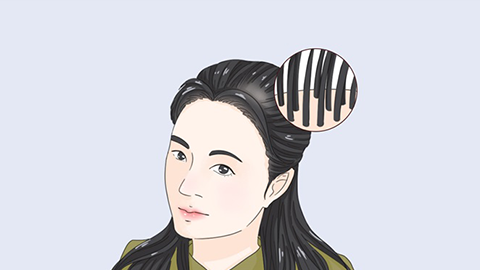
Alternatively, large dandruff flakes may signal scalp psoriasis—a form of psoriasis affecting the scalp. Its hallmark features include well-defined, white, scaly plaques on the scalp, with underlying infiltrative erythematous patches. Affected areas often show tightly bundled tufts of hair resembling brush tips—hence the term “brush-hair sign.” If lesions extend to the hairline, erythematous plaques may also appear beyond the hairline. In contrast, simple pityriasis capitis remains confined strictly to the hairy regions of the scalp.
Treatment for scalp psoriasis differs significantly from that for pityriasis capitis. Mild cases are managed with topical corticosteroids or calcipotriol solution; severe cases may require systemic oral medications to control the disease. We hope this information proves helpful!


